
It’s 2:00 PM on a Tuesday. The waiting room at your St. Louis clinic is at capacity, the phones are ringing, and your medical assistants are hustling to room patients. A physician sits down at their workstation, clicks to open a patient’s electronic medical record (EMR), and is met with the dreaded spinning wheel of death.
Every second that chart takes to load is a second stolen from patient care.
For healthcare administrators and practice managers, this scenario is a recurring nightmare. When an Electronic Medical Record (EMR) or Electronic Health Record (EHR) system lags, crashes, or fails to sync, it triggers a domino effect of physician burnout, frustrated patients, and lost billable hours.
Most clinics simply blame the software—cursing Epic, Cerner, or eClinicalWorks under their breath. But more often than not, the true culprit isn’t the software itself. It’s the invisible IT infrastructure supporting it.
To permanently solve these clinical bottlenecks, we need to look beyond generic IT support and understand the system specifically designed to handle the complexity of healthcare technology: the multi-tiered help desk.
Let’s demystify how this specialized support structure works, how it identifies hidden network breakpoints, and why it’s the key to keeping your clinic running seamlessly.
The Root of the Problem: Why Is Your EMR System So Slow?
To understand how a tiered IT support system fixes your EMR, we first have to understand why it breaks. When you experience lag, it’s rarely a single massive failure. Instead, it’s usually what IT professionals call a “breakpoint.”
Think of your EMR system like a massive digital highway. Data has to travel from a cloud server, down the highway (your internet connection), onto the local roads (your clinic’s network), and into the driveway (your laptop or tablet). A traffic jam anywhere along that route causes a delay.
Before assuming the EMR software is broken, a strategic IT approach looks at three critical breakpoints:
- The Endpoint Device (The Driveway): Are your physicians using five-year-old laptops with outdated operating systems? An EMR requires robust processing power. If the hardware is ancient, the newest software will always run poorly.
- The Network Breakpoints (The Local Roads): Are patient cell phones and smartwatches logging onto the same Wi-Fi network that your nurses use to upload heavy diagnostic imaging? Without proper “network segmentation,” your EMR is competing for bandwidth with a patient streaming Netflix in the waiting room.
- Bandwidth and Cloud Latency (The Highway): This is incredibly common for satellite clinics in the wider St. Louis region. A main hospital might have lightning-fast fiber internet, but if a remote specialty clinic is operating on limited bandwidth, syncing massive databases back to the main server will cause the entire system to crawl.
Diagnosing these breakpoints requires more than a single “IT guy.” It requires a structured, specialized approach.
Demystifying the Multi-Tiered Help Desk (Healthcare Edition)
Many healthcare providers rely on a “break-fix” model or a small group of IT generalists. When an issue arises, you submit a ticket, and it goes into a single, overwhelming queue.
A multi-tiered help desk fundamentally changes this dynamic. Instead of relying on generalists, it functions much like a hospital’s triage and specialist system. Here is what happens behind the scenes when a multi-tiered help desk processes an IT ticket:
Tier 1: The Triage (Frontline Support)
Just as an ER nurse assesses incoming patients, Tier 1 engineers are built for speed and rapid remediation. They handle the highest volume of requests—password resets, locked EMR portals, basic connectivity issues, and printer malfunctions.
- The Clinical Impact: Because they focus entirely on rapid fixes, issues that used to stall a nurse’s morning can be resolved instantly. In fact, this is how specialized providers like ThrottleNet achieve an average response time of just 90 seconds.
Tier 2: The Specialists (Complex Integration)
If Tier 1 discovers that your issue isn’t just a simple login error, the ticket immediately escalates to Tier 2. These engineers handle deeper troubleshooting. They map local networks, resolve complex medical device integrations, and investigate software-level EMR conflicts.
- The Clinical Impact: If an X-ray machine fails to push an image to the EMR, a Tier 2 specialist has the advanced networking knowledge to find out exactly where the data packet was dropped, ensuring doctors get the images they need without agonizing delay.
Tier 3: The Surgeons (Infrastructure & Architecture)
Tier 3 engineers are your infrastructure architects. They don’t typically handle daily user errors; instead, they manage the massive cloud environments, disaster recovery protocols, server health, and deep database syncing issues that keep the entire clinic online.
- The Clinical Impact: By proactively managing the heavy lifting behind the scenes, Tier 3 engineers prevent the catastrophic network outages that force clinics to revert to pen and paper.
Why This Matters: The biggest frustration with standard IT support is the “pass around” effect—waiting on hold for an hour, only to realize the person on the other end doesn’t have the clearance or knowledge to fix your specific server problem. A multi-tiered system relies on specialized teams, which is why leading Managed Service Providers (MSPs) utilizing this model can hit a 93% same-day resolution rate. The problem goes directly to the person qualified to fix it.
Beyond the Help Desk: HIPAA, Compliance, and Proactive Strategy
Fixing a broken EMR connection is crucial, but true healthcare IT isn’t just about reacting to problems; it’s about anticipating them. This is where a Virtual Chief Information Officer (vCIO) bridges the gap between technology and clinical strategy.
Unlike a standard account manager, a vCIO acts as an extension of your clinic’s leadership team. They sit down with practice administrators to align technology with the clinic’s future goals.
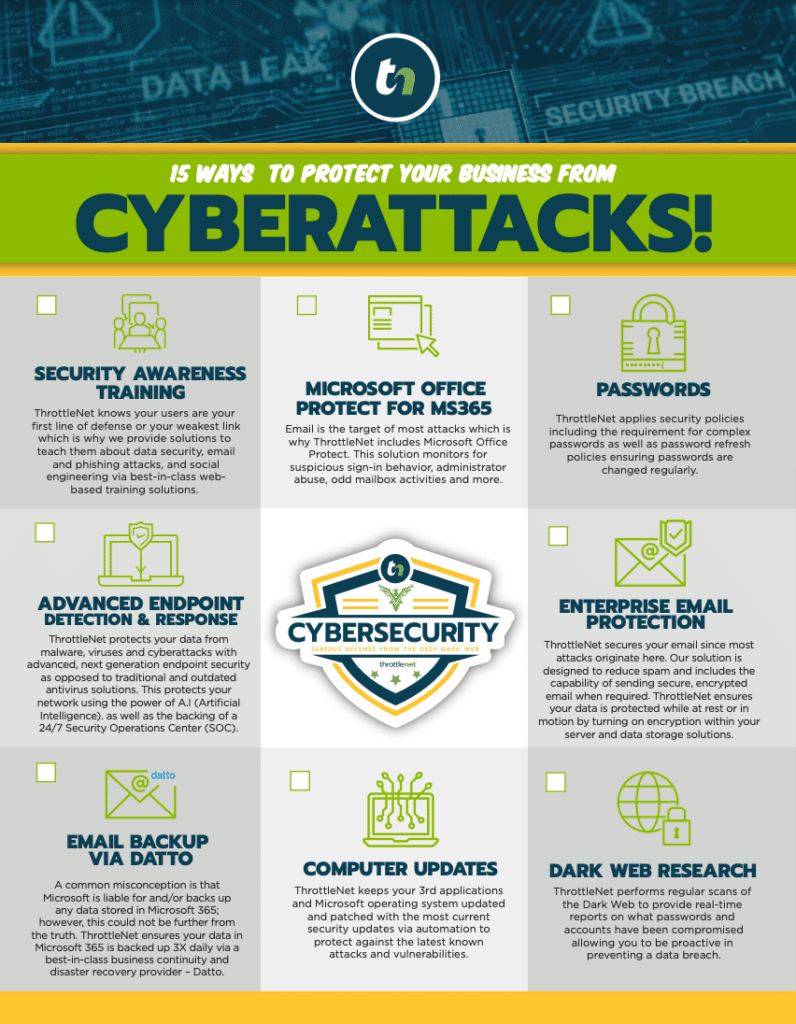
- HIPAA and Cybersecurity Oversight: Healthcare is a primary target for ransomware attacks because patient data is incredibly valuable. A vCIO ensures that every level of your IT infrastructure meets NIST standard compliance. They implement 24/7 Security Operations Center (SOC) monitoring and next-generation endpoint security. (This proactive stance is why ThrottleNet, repeatedly named the #1 IT Firm in St. Louis by St. Louis Small Business Monthly, offers a one-of-a-kind $500,000 cybersecurity protection program).
- Business Continuity and Disaster Recovery (BCDR): If a storm knocks out power to your main server room, how long will it take to get your EMR back online? A vCIO ensures your verified backups and disaster recovery plans mean your patient data is safe and accessible, no matter what happens.
- Budgeting and Lifecycle Planning: Instead of being hit with a surprise $30,000 server replacement bill, your vCIO maps out your hardware lifecycle years in advance, bringing predictability to your operational budget.
The Clinic’s IT Self-Audit: Diagnosing Your Support
Are you wondering if your current IT setup is holding your clinic back? Use this quick self-diagnostic checklist to evaluate your environment:
- The “Is it the EMR or the Internet?” Test: Does the EMR lag only at a specific time of day? (If so, you likely have a network bottleneck when patient traffic peaks, not a software bug).
- The Response Time Audit: When a critical EMR issue occurs, how long does it take to get a human on the phone? If it’s longer than two minutes, your support structure is costing you billable hours.
- The Generalist vs. Specialist Test: Do the same IT technicians who reset your passwords also design your cybersecurity architecture? If so, your network security may be dangerously thin.
- The Ransomware Reality Check: Does your IT provider financially stand behind their cybersecurity solutions, or are you absorbing 100% of the risk if a breach occurs?
Frequently Asked Questions (FAQ)
What is the true cost of EMR latency?
It’s not just an annoyance; it’s a massive financial drain. If an EMR system takes just three extra seconds to load a chart, and a physician sees 30 patients a day, those seconds compound into hours of lost billable time, elevated physician burnout, and increased administrative overhead over the course of a year.
What is “network segmentation” and why do clinics need it?
Network segmentation is the practice of dividing a computer network into smaller, isolated parts. In a clinic, this means separating your mission-critical EMR traffic from the guest Wi-Fi used by patients in the waiting room. It ensures that public internet use never degrades the speed and security of your medical software.
How does co-managed IT work for larger healthcare networks?
If your clinic already has an internal IT manager, you don’t necessarily have to replace them. Co-managed IT allows your internal team to handle day-to-day user support while leaning on an external multi-tiered help desk for complex tasks like 24/7 cybersecurity monitoring, cloud migrations, and vCIO strategy. It gives your internal team enterprise-level tools without the cost of hiring a dozen new full-time employees.
Why are satellite clinics so vulnerable to IT issues?
Satellite clinics often lack the robust hardware and enterprise-grade internet connections found in main hospitals. If their network bandwidth isn’t optimized for the heavy data packets required by modern EMR systems, staff will constantly struggle with connectivity drops and system timeouts.
Bringing It All Together
Your medical staff shouldn’t have to be makeshift IT troubleshooters. When you transition from a reactive, generalist IT approach to a proactive, multi-tiered help desk, the daily frustrations of spinning wheels and dropped connections disappear.
By utilizing specialized engineers, implementing rigorous cybersecurity standards, and planning for the future with a dedicated vCIO, you create an environment where technology silently empowers your team, rather than holding them back.
If you’re ready to see how a specialized IT infrastructure can transform your clinic’s daily operations, evaluating your current technology roadmap is the perfect place to start. A healthy IT environment is the foundation of exceptional patient care.