
It’s 4:00 PM on a Friday. Your team in Clayton is racing against the clock to submit a final bid for a major municipal project in the City of St. Louis. But instead of finalizing the proposal, your lead architect is staring at the spinning wheel of death on their workstation.
Meanwhile, your structural engineer working remotely in Kirkwood is trying to sync a 4-gigabyte Revit model over a standard cloud connection, resulting in file corruption and version control chaos.
For architectural and engineering (AEC) firms, IT isn’t just overhead—it’s the engine that drives billable hours. A single hour of downtime during a project deadline can cost more than a year of the right IT solutions. Yet, many St. Louis firms are trying to support complex, heavy-duty design software using the same basic IT setups designed for standard accounting or law offices.
If your firm is struggling with slow CAD performance, massive file-sharing headaches, or insecure remote collaboration, you aren’t alone. Let’s break down the “why” behind these frustrations and explore how modern AEC firms are turning their technology from a bottleneck into a competitive advantage.
The AEC Tech Triangle: Power, Collaboration, and Security
To build a flawless physical structure, you need a solid foundation. The same applies to your digital environment. The IT needs of an architectural or engineering firm rest on three core pillars: Computing Power, File Collaboration, and Security.
Computing Power: Demystifying the CAD Workstation
One of the most common mistakes firm owners make is buying high-end “gaming” computers for their drafting team, assuming that if it can handle complex video games, it can handle AutoCAD or Revit.
Here is the technical reality: standard PCs and gaming rigs process data differently than professional workstations.
- The Processor (CPU): Programs like AutoCAD are notoriously “single-threaded,” meaning they rely on the sheer speed of a single processor core rather than spreading the work across multiple cores. If you buy a processor with 16 slow cores, CAD will still lag.
- The Graphics Card (GPU): Gaming GPUs (like the NVIDIA GeForce line) are built to render millions of polygons for a fraction of a second. Professional GPUs (like NVIDIA Quadro or AMD Radeon Pro) are built for mathematically precise rendering and sustained performance over hours of modeling.
Standardizing your workstations with the right hardware ensures your architects spend their time designing, not waiting for screens to refresh.
File Collaboration: The “Aha” Moment of the Hybrid Cloud
If you’ve ever tried to host a multi-gigabyte central Revit model on standard consumer cloud storage like Dropbox or Google Drive, you already know the pain of file conflicts, corrupted data, and overwritten work. These platforms simply do not understand AEC file-locking mechanisms.
The breakthrough for many firm principals is realizing that the solution isn’t “all on-premise” or “all in the cloud.” The answer is a Hybrid Cloud strategy.
In a hybrid setup, your massive 3D models live on a high-speed local server in your office. This gives your local team the lightning-fast, zero-latency performance they need to work efficiently. Meanwhile, a cloud gateway securely syncs these files to the cloud. When a project manager is on-site in downtown St. Louis or an engineer is working from home, they access the cloud version. The system intelligently handles file locking and version control, ensuring nobody overwrites someone else’s work.
Security: Protecting Your Intellectual Property
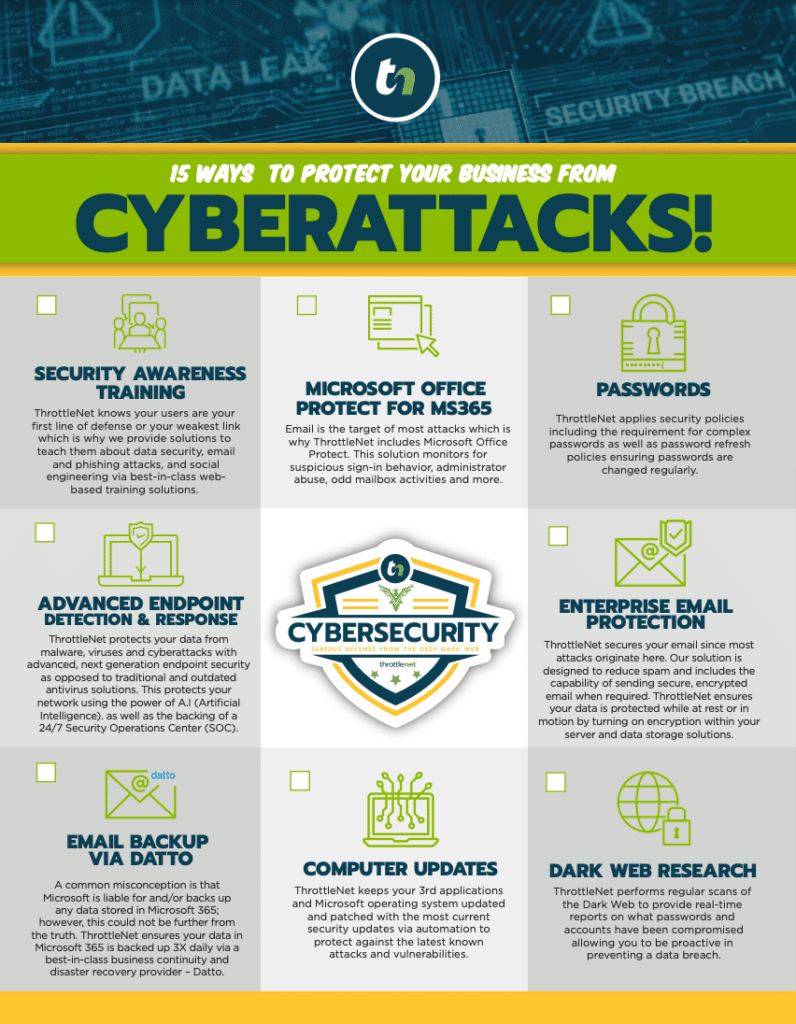
AEC firms are prime targets for cyberattacks, specifically ransomware. Why? Because your servers hold highly sensitive intellectual property—blueprints, proprietary designs, and confidential bids. If a hacker encrypts those files, your firm’s operations grind to a complete halt.
Basic antivirus software is no longer enough. Modern firms require a 24/7 Security Operations Center (SOC) and persistent threat monitoring. To put this in perspective: businesses equipped with enterprise-grade, multi-layered cybersecurity protection dramatically reduce their risk of data compromise. In fact, relying on robust, layered defense systems is why certain top-tier IT providers can confidently offer $500,000 cybersecurity protection programs to back their services.
Common IT Mistakes Costing St. Louis Firms Time and Money
Understanding the technology is only half the battle. How you manage that technology dictates your firm’s profitability. Here are two critical mistakes we see frequently in the St. Louis market.
Mistake 1: Relying on IT Generalists
Many mid-sized firms rely on a single internal “IT guy” or a generalist IT provider. While they may be incredibly hardworking, the sheer complexity of modern AEC technology requires specialists.
When a Revit license fails or a cloud sync breaks, you don’t have time for a generalist to learn on the job. You need a multi-tiered help desk where your call is instantly routed to an engineer who understands your specific software stack. The industry gold standard to look for is a provider who can boast a 90-second average response time and a 93% same-day resolution rate. When problems are solved faster, your team stays billable.
Mistake 2: CapEx Shock vs. IT Strategy
How often has your firm been hit with a surprise $30,000 server replacement bill? Reactive IT creates budget chaos.
Forward-thinking firms partner with a Virtual Chief Information Officer (vCIO). A vCIO isn’t just an account manager; they are a dedicated IT strategist who sits on your side of the table. They help you build a 3-year technology roadmap, plan your hardware lifecycles, and transition unpredictable Capital Expenditures (CapEx) into predictable, manageable Operating Expenditures (OpEx).
Building Your Firm’s IT Strategy (A 3-Step Framework)
Ready to stop fighting your technology? Use this framework to regain control:
- Audit Your Workflows: Talk to your team. Where are they waiting? Is it slow file opening times? Is it VPN crashes when working remotely? Identify the exact bottlenecks draining your billable hours.
- Define Your Infrastructure: Work with a specialist to determine if a hybrid cloud environment is right for your firm. Map out exactly how your local servers will sync with cloud platforms to support your remote workers and municipal partners.
- Demand Better Support Metrics: Stop settling for “we’ll get back to you by tomorrow.” Look for IT partners that offer verified performance metrics. If your IT support team isn’t responding within 90-seconds on average and resolving the vast majority of issues the same day, you are losing money to downtime.
Frequently Asked Questions (FAQ)
What’s the difference between consumer cloud storage and AEC document management?
Consumer cloud storage (like basic Dropbox or OneDrive) simply copies files from one place to another. It does not understand the complex “file locking” required when multiple architects are working on a single central BIM or Revit model. Specialized AEC solutions (or properly configured hybrid servers) lock specific elements of a file so two people don’t overwrite each other’s work, preventing catastrophic data corruption.
How much RAM do we actually need for AutoCAD and Revit?
While 16GB of RAM used to be the standard, modern 3D modeling and rendering require much more. For a dedicated CAD/Revit workstation today, 32GB of RAM is the absolute minimum, with 64GB highly recommended for users handling massive, multi-discipline models or running simultaneous software applications.
Is it safe to let architects work remotely on large models?
Yes, but only if the right infrastructure is in place. Relying on an old, slow VPN to pull a 5GB file from your office server to a home laptop is a recipe for frustration and data loss. Secure remote work requires a hybrid cloud setup or Virtual Desktop Infrastructure (VDI), where the heavy computing happens on the server, and only the “pixels” are securely transmitted to the remote user’s screen.
What is a vCIO, and why does an engineering firm need one?
A Virtual Chief Information Officer (vCIO) is a dedicated IT strategist who understands both technology and your business goals. While standard IT support fixes things when they break, a vCIO looks ahead. They handle cybersecurity risk management, ensure compliance with government contracts, manage vendor relationships (like Autodesk), and build IT budgets that align with your firm’s growth plans.
Ready to Build a Stronger IT Foundation?
At ThrottleNet, we understand that for St. Louis architectural and engineering firms, technology isn’t just a tool—it’s the blueprint for your success. As the #1 IT Firm in St. Louis for 12 consecutive years, our team doesn’t just fix computers; we turn frustration into joy by keeping your team productive, secure, and future-ready.
With our unique multi-tiered help desk, dedicated specialist teams, and industry-leading 90-second average response time, we eliminate the friction in your daily operations. Plus, our open-book management philosophy means every ThrottleNet employee is actively incentivized to go above and beyond for your business.
Don’t let outdated technology limit your firm’s potential. If you’re ready to explore how a tailored, co-managed, or fully managed IT strategy can transform your firm, it’s time to map your custom technology roadmap with our expert vCIOs.