
Imagine this scenario: It’s a busy Tuesday morning at your healthcare practice in Chesterfield. The waiting room is full, the phones are ringing, and your staff is working tirelessly to keep everything running smoothly. Then, a medical assistant accidentally leaves a clinic laptop at a local coffee shop on Clarkson Road.
If that laptop is unencrypted, it’s not just a missing piece of hardware. It’s a potential data breach. Suddenly, you aren’t just dealing with the cost of a new computer; you’re facing federal fines, a mandatory notification process, a potential headline in local news, and—most devastatingly—a loss of trust from the Chesterfield community you serve.
For many practice managers and clinicians, IT and cybersecurity are massive sources of anxiety. You specialize in patient care, not configuring network firewalls. But the reality of modern medicine is that patient data security is patient care.
If you don’t have a dedicated IT department, navigating the complex web of HIPAA regulations can feel like learning a foreign language. But it doesn’t have to be overwhelming. Let’s translate these complex regulations into a clear, actionable roadmap to keep your practice secure, compliant, and focused on what matters most.
Demystifying the Foundation: The 3 Pillars of HIPAA IT Security
Before diving into checklists, it helps to understand what you are actually trying to protect. HIPAA is primarily concerned with PHI (Protected Health Information) and ePHI (Electronic Protected Health Information). This includes anything that can identify a patient and relates to their health status, care provision, or payment.
To protect ePHI, the HIPAA Security Rule requires three types of safeguards. Think of your practice’s network like a medieval castle:
1. Administrative Safeguards (Your Rules)
These are the laws of your land. Administrative safeguards are the documented policies and procedures that dictate how your practice manages data security. It includes designating a security official, establishing employee training programs, and creating an incident response plan. Even the best technology fails if your team doesn’t know the rules.
2. Physical Safeguards (Your Locks)
These are the castle walls, locked gates, and drawbridges. Physical safeguards control physical access to your electronic information systems and the buildings housing them. This means keeping servers in locked rooms, using privacy screens on front-desk monitors so patients can’t read them, and securing laptops so they can’t be easily walked out the door.
3. Technical Safeguards (Your Guards and Alarms)
This is where IT services come into play. Technical safeguards are the technology and the policies for its use that protect ePHI and control access to it. This includes user passwords, data encryption, antivirus software, and network firewalls.
The Step-by-Step HIPAA IT Action Plan (For Practices Without an IT Guy)
If your practice is relying on a single, “jack-of-all-trades” office manager to handle IT, you are leaving your business exposed. But you can take control today. Here is a practical, 5-step action plan to build a compliant IT foundation.
Step 1: The 60-Minute Risk Assessment
You can’t protect what you don’t know you have. Take an hour to map out exactly where your ePHI lives. Is it only in your Electronic Health Record (EHR) system? Do doctors have patient notes saved on their local hard drives? Are appointment schedules synced to personal smartphones?
The Aha Moment: Many practices mistakenly believe that because their EHR vendor is HIPAA compliant, the practice itself is compliant. Your EHR vendor only protects the data inside their software. If your staff downloads a patient list to an Excel file on a vulnerable desktop, you are entirely responsible for that data.
Step 2: Implement Strict Access Controls
HIPAA operates on the “Principle of Least Privilege.” Employees should only have access to the specific data they need to perform their jobs—nothing more. Ensure every employee has their own unique login (no shared “frontdesk” passwords) and set systems to automatically log out after a few minutes of inactivity.
Step 3: Encrypt Everything (At Rest and In Transit)
Encryption scrambles your data so that even if a device is stolen, the information is unreadable without the decryption key.
- Laptops and Hard Drives: Ensure full-disk encryption is turned on (like BitLocker for Windows or FileVault for Mac).
- Emails: Standard email is like sending a postcard; anyone who intercepts it can read it. You need a secure, encrypted email solution specifically configured for healthcare.
- Backups: If your server crashes or gets hit by ransomware, you need verified, encrypted backups to restore your practice without losing data.
Step 4: Secure Your Office Network
Your office Wi-Fi is a prime target for cybercriminals. Never allow patients to use the same Wi-Fi network that your staff uses to access medical records. Set up a dedicated, isolated “Guest” network. Additionally, you need a business-grade firewall constantly monitored for intrusions.
Step 5: Train Your Human Firewall
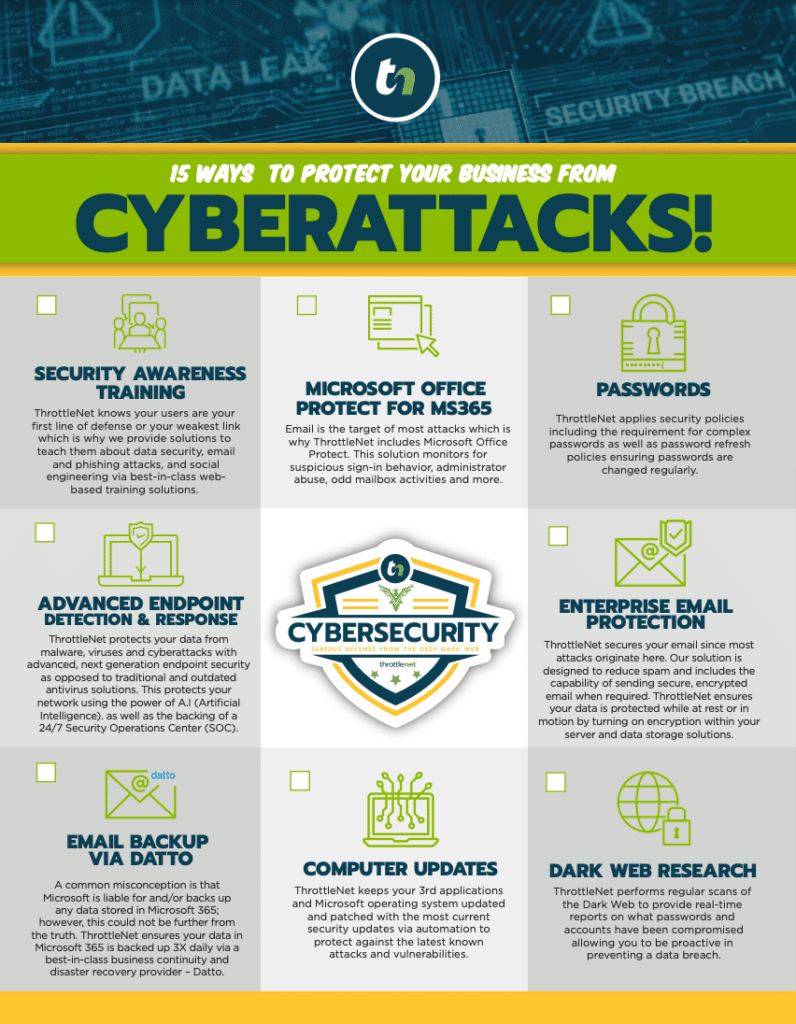
Your employees are both your biggest vulnerability and your strongest defense. Phishing emails and social engineering are the leading causes of data breaches in small practices. Conduct regular, mandatory security awareness training so your team knows how to spot a fake email before they click a malicious link.
Handling Modern Challenges: Cloud, Mobile, & Vendors
The modern medical practice extends far beyond the four walls of the clinic. Today’s workflows introduce new complexities that must be managed.
The BYOD (Bring Your Own Device) Dilemma
If your doctors and nurses are checking work emails or accessing patient data on their personal iPhones or Androids, your practice is at risk. You must establish a strict BYOD policy. Utilizing Mobile Device Management (MDM) software allows you to separate business data from personal data on a phone, and gives you the power to remotely wipe the business data if the phone is lost.
Business Associate Agreements (BAAs)
If you hire a third-party vendor that touches your ePHI—such as a billing company, a cloud backup provider, or an IT support firm—HIPAA requires you to have a signed Business Associate Agreement (BAA) with them. This legal document ensures they are also legally bound to protect your patient data. If your current IT provider refuses to sign a BAA, they are not qualified to serve your healthcare practice.
How Managed IT Services Transform Compliance into Confidence
Trying to manage administrative workflows, physical security, and advanced technical safeguards on your own is a recipe for burnout and costly mistakes. This is why many independent practices in Chesterfield partner with a Managed IT Services Provider (MSP) to take turnkey responsibility for their network.
At ThrottleNet, we’ve spent over 25 years helping St. Louis and Chesterfield businesses turn technology frustration into joy. Voted the #1 IT Firm in St. Louis by St. Louis Small Business Monthly for 12 consecutive years, we understand the unique pressure healthcare practices face.
When you partner with a specialized provider, you stop worrying about compliance and start focusing entirely on patient care. Here is how a dedicated IT partnership changes the game:
- Unmatched Speed: In healthcare, downtime isn’t just an inconvenience; it impacts patient care. Our multi-tier help desk structure delivers a best-in-industry 90-second average response time and a 93% same-day resolution rate.
- Specialized Teams, Not Generalists: We don’t rely on general IT techs. You gain access to dedicated experts in cybersecurity, cloud services, and a Virtual Chief Information Officer (vCIO) who helps map out your practice’s long-term technology strategy.
- Proactive Security: Instead of reacting to problems, our 24/7 Security Operations Center (SOC) provides persistent threat monitoring, next-generation endpoint security, and NIST-standard compliance tracking. We are so confident in our protective layers that we back our clients with a one-of-a-kind $500,000 Cybersecurity Protection Program. ThrottleNet customers have never paid a ransomware attack.
- Co-Managed Options: If you already have an internal IT manager who is overwhelmed by daily support tickets, our Co-Managed IT services can act as an extension of your team, providing enterprise-level cybersecurity tools and specialized strategy without the cost of a full-time hire.
Frequently Asked Questions About HIPAA IT Compliance
What exactly is HIPAA IT compliance?
HIPAA IT compliance refers to fulfilling the specific requirements of the HIPAA Security Rule. It involves implementing the necessary Administrative, Physical, and Technical safeguards to ensure the confidentiality, integrity, and availability of all electronic Protected Health Information (ePHI) your practice creates, receives, maintains, or transmits.
Do I need to worry about IT compliance if I use a HIPAA-compliant EHR?
Absolutely. This is the most common and dangerous myth in healthcare IT. Your EHR vendor is only responsible for the data while it is securely inside their specific cloud environment. The computers your staff use to access it, your office Wi-Fi, your email system, your backups, and your staff’s mobile devices are entirely your legal responsibility.
Are cloud backups HIPAA compliant?
They can be, but they are not compliant by default. To use cloud backups legally under HIPAA, the data must be encrypted both while it is being sent to the cloud (in transit) and while it sits on the cloud servers (at rest). Additionally, the cloud provider must sign a Business Associate Agreement (BAA) with your practice.
What happens if our Chesterfield practice has a data breach?
If unencrypted ePHI is compromised, the HIPAA Breach Notification Rule requires you to notify affected individuals, the Secretary of Health and Human Services (HHS), and potentially local St. Louis media outlets if the breach affects more than 500 residents. Beyond the devastating loss of patient trust and bad press, you could face regulatory fines ranging from hundreds to millions of dollars depending on the level of negligence.
Your Next Steps: Building a Secure Foundation
Achieving HIPAA IT compliance doesn’t happen overnight, but delaying action is the biggest risk your practice can take.
Start by taking a hard look at your current technology environment. Do you know exactly who has access to your patient files? Are you absolutely certain your backups are running properly and are fully encrypted? Do you have a strategic IT roadmap, or are you just waiting for the next computer to break?
You don’t have to navigate these waters alone. Look for an IT partner who speaks your language, avoids technical jargon, and provides transparent, month-to-month agreements that earn your business through performance, not lock-in contracts.
To discover where your practice might be vulnerable, reach out to a specialized IT and cybersecurity firm for a comprehensive network assessment. By proactively securing your digital foundation today, you ensure that your practice remains a trusted, safe haven for your patients tomorrow.