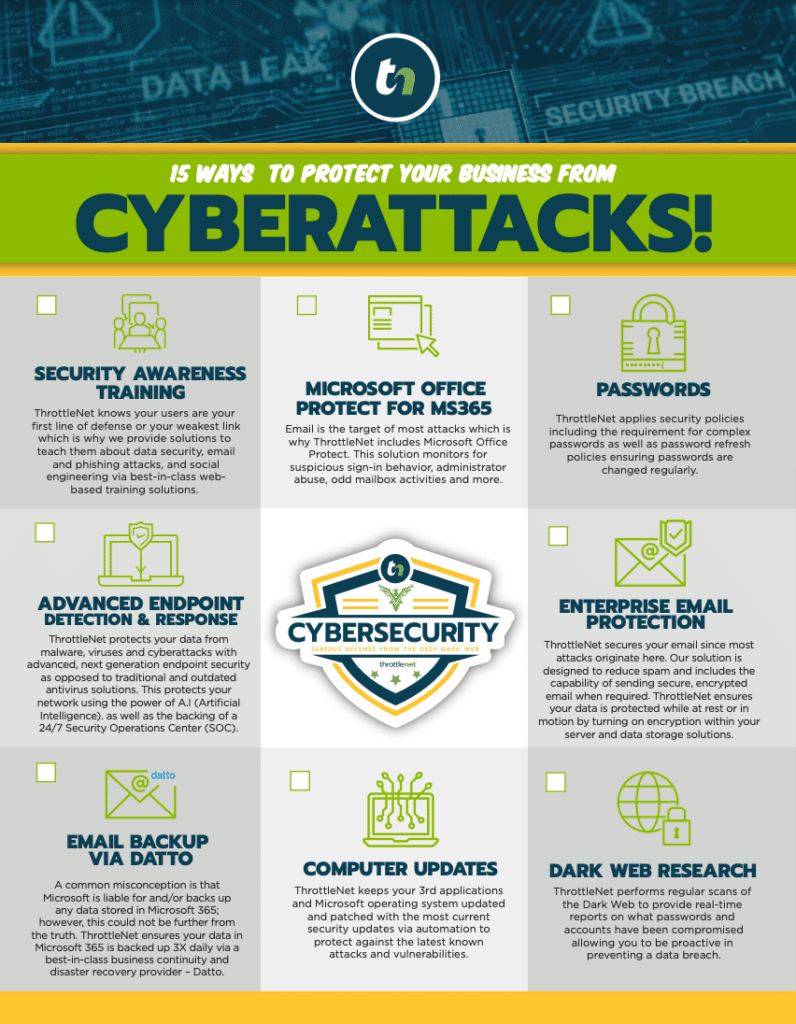

At ThrottleNet, adding an ISO 22301 business continuity strategist to our team is more than a line on a résumé, it’s a strategic advantage for the businesses we support. Business continuity isn’t just about “backups” or “having IT support”; it’s about making sure your organization can keep operating when something goes wrong.
From ransomware and cloud outages to regional storms and supply chain disruptions, small and mid-sized businesses face the same threats as large enterprises; often with far fewer resources. That’s exactly where our new certification matters.
What is ISO 22301—and Why Should a Business Owner Care?
ISO 22301 is the international standard for Business Continuity Management Systems (BCMS). In plain English, it’s a globally recognized framework that helps organizations:
- Identify critical business functions
- Understand what happens if those functions are disrupted
- Design practical plans to keep the business running during and after an incident
Instead of reacting in panic when systems go down or data is locked by ransomware, ISO 22301 encourages proactive planning, testing, and continuous improvement. For business owners, that translates into less downtime, fewer surprises, and a much clearer picture of operational risk.
When your IT and cybersecurity partner understands this standard and applies it to your environment, you’re not just “covered” technically—you’re more resilient as a business.
What Having This Certification Means for ThrottleNet Clients
With an ISO 22301 business continuity strategist on staff, we’re able to look at your environment through a structured, globally recognized framework for resilience. That benefits your business in several key ways:
1. Business-first risk assessments
Instead of simply listing technical vulnerabilities, we prioritize risk based on business impact.
- What systems make you money or keep you compliant?
- What processes are critical to serving your customers?
- What would hurt most if it stopped working for a day? A week? Longer?
We translate these answers into a prioritized continuity and recovery plan.
2. Better-aligned disaster recovery and backup strategies
Backups are only as good as your ability to restore them—fast and in the right order.
We align your backup and disaster recovery strategy with your actual business priorities, not just generic IT best practices. That means designing recovery time objectives (RTOs) and recovery point objectives (RPOs) that match what your business can tolerate.
3. Documented, repeatable playbooks
When something breaks, your team shouldn’t be guessing what to do.
We help build clear playbooks outlining:
- Who is responsible for what
- How communication flows (internally and to customers)
- What gets restored first
- How decisions are made
This reduces chaos and speeds up recovery when every minute counts.
4. Regular testing and improvement
Real resilience comes from testing. Tabletop exercises, failover tests, and scenario planning reveal gaps before an actual incident exposes them.
We use ISO 22301 principles to schedule and structure those tests so they’re useful, not disruptive.
Why It Matters Who You Choose as an IT & Cybersecurity Partner
Working with a partner that employs an ISO 22301 business continuity strategist means your continuity planning isn’t just based on gut feeling or past experience, it’s aligned to a proven standard.
This matters because:
- Cybersecurity, IT, and business continuity are now tightly intertwined. A security incident is often a business continuity event.
- Regulators, insurers, and larger customers increasingly expect documented continuity plans, especially in regulated industries.
- The cost of downtime is rising—from lost revenue and productivity to reputational damage and missed opportunities.
You don’t need to become an expert in ISO standards. You just need a partner who understands them and can translate them into practical steps that protect your business.
What This Means for Your Business Going Forward
For ThrottleNet clients and future clients, our expanded expertise means:
- More strategic conversations about risk and resilience—not just tickets and tech.
- Continuity and disaster recovery planning tailored to how your business actually works.
- A roadmap for improving resilience over time instead of one-and-done “projects.”
Our goal is simple: keep your business running securely, even when the unexpected happens.
If you want to see what partnering with a team that includes an ISO 22301 business continuity strategist looks like for your organization, reach out to ThrottleNet today. We’ll help you move from “I hope we’re covered” to “I know we’re prepared.”

Jeremiah Jeffers
Business Development Assistant
[email protected]