
By Aaron Oliver, Senior Network Engineer at ThrottleNet

Introduction: The Overlooked Threat Behind Cyber Attacks
Over the past few years, cybersecurity has dominated the headlines with global outbreaks of malware and ransomware, including the infamous WannaCry attack that crippled thousands of businesses worldwide. Yet, many St. Louis business owners remain unaware of a quieter but equally dangerous threat: social engineering and your website.
While malware often makes the news, social engineering is frequently the first step in a larger attack. It’s how hackers gather the information they need to breach systems, steal data, or deploy ransomware—all by exploiting human trust.
What Is Social Engineering and How Does It Affect Your Website?
Social engineering and your website are deeply connected. Social engineering refers to the psychological manipulation of people into revealing sensitive information or performing actions that compromise security. Attackers often use company websites as reconnaissance tools to identify key employees, email addresses, or internal processes before launching their schemes.
A cybercriminal may:
- Call pretending to be from your IT department and request access or credentials.
- Send phishing emails disguised as legitimate vendors or partners.
- Use details found on your website to craft convincing fake communications.
Even something as simple as listing your staff directory, complete with names and contact info, can give an attacker everything they need to execute a targeted phishing attack. For more information, check out the CISA social engineering awareness guide.
Why St. Louis Companies Are Especially at Risk
The St. Louis business community—from healthcare and finance to manufacturing and logistics—relies heavily on digital infrastructure. Unfortunately, this makes local businesses prime targets for cybercriminals who use social engineering and your website as entry points.
Small and mid-sized companies often prioritize marketing transparency over cybersecurity. But by publishing names, emails, and phone numbers online, they inadvertently hand attackers the details needed to impersonate trusted employees or partners.
How Attackers Exploit Information on Your Website
When hackers visit your website, they look for:
- Employee directories listing names, titles, and departments
- Contact forms revealing internal routing or departmental emails
- Vendor logos or partner mentions that can be spoofed
- IT or leadership mentions that make impersonation easier
Once this information is gathered, an attacker might:
- Pretend to be an internal IT technician following the orders of your “IT Director.”
- Email your staff with a fake invoice from a listed partner.
- Convince an employee to open a malicious attachment or grant remote access.
In many cases, these simple tricks are the first domino to fall in a larger data breach.
Preventing Social Engineering Through Website Security
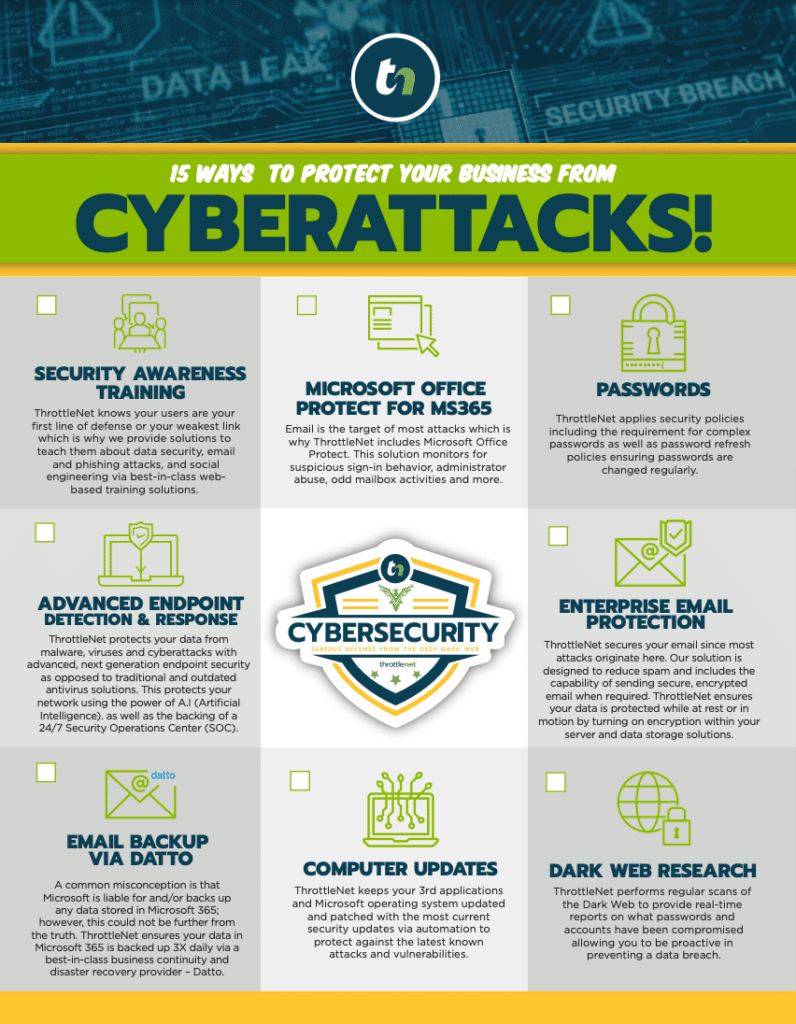
ThrottleNet recommends a layered defense approach that starts with your website and extends to your internal cybersecurity training.
Key steps to protect your business:
- Audit your website content – Remove or limit employee names, contact details, and organizational charts.
- Use generic contact forms – Route messages internally instead of displaying direct emails.
- Train employees – Teach staff how to identify phishing, vishing, and impersonation tactics.
- Implement web application firewalls (WAFs) – These tools help block suspicious behavior and data scraping.
- Schedule regular cybersecurity training – Reinforce safe practices quarterly.
- Monitor for impersonation – Use alert tools to catch spoofed emails or fake login attempts.
Even small updates to your website can make it far more difficult for attackers to find and exploit information.
ThrottleNet’s Local Expertise in St. Louis Website Security
As a St. Louis-based IT and cybersecurity provider, ThrottleNet has helped hundreds of local businesses protect their digital assets from social engineering attacks. Our team combines proactive monitoring, employee training, and secure web design practices to ensure your website isn’t an attacker’s first stop.
Protecting your company’s reputation, client data, and revenue starts with understanding how social engineering and your website interact—and how to close the door before attackers knock.
FAQ: Social Engineering and Your Website
Q1: What is the connection between social engineering and my website?
Your website often contains key details—like employee names and departments—that attackers use to impersonate trusted individuals.
Q2: Should I remove my team’s names from the website entirely?
Not necessarily. Instead, limit specific contact details and avoid listing direct phone numbers or emails publicly.
Q3: How can training help prevent attacks?
Employees trained to recognize phishing or impersonation attempts are far less likely to fall for social engineering tactics.
Q4: What industries in St. Louis are most at risk?
Healthcare, finance, law, and manufacturing are top targets, but any business with an online presence can be vulnerable.
Q5: How often should I audit my website for social engineering risks?
ThrottleNet recommends reviewing your site quarterly or after any major updates.
Next Steps: Get a Cybersecurity Website Audit
ThrottleNet offers free website vulnerability audits for St. Louis businesses. Our experts will identify what public information could make your business a target for social engineering and provide a customized plan to secure it.
Contact ThrottleNet today to safeguard your website and employees before attackers strike.