
4 Expert Tips for Improving Network Security in Your Business
More businesses than ever are depending on their network to handle everything from email and data storage to customer transactions and daily operations. As this digital dependency grows, so does the risk. One data breach or ransomware attack can disrupt your business, damage your reputation, and cost thousands in recovery and lost productivity.
That’s why improving network security isn’t optional—it’s essential.
Network security is a combination of hardware, software, policies, and practices designed to prevent unauthorized access and protect your data from both internal and external threats. A single vulnerability in your system can be exploited by hackers, putting your company’s most valuable assets—your information, your customers, and your credibility—at risk.
Here are four practical tips for improving network security in your small or mid-sized business.
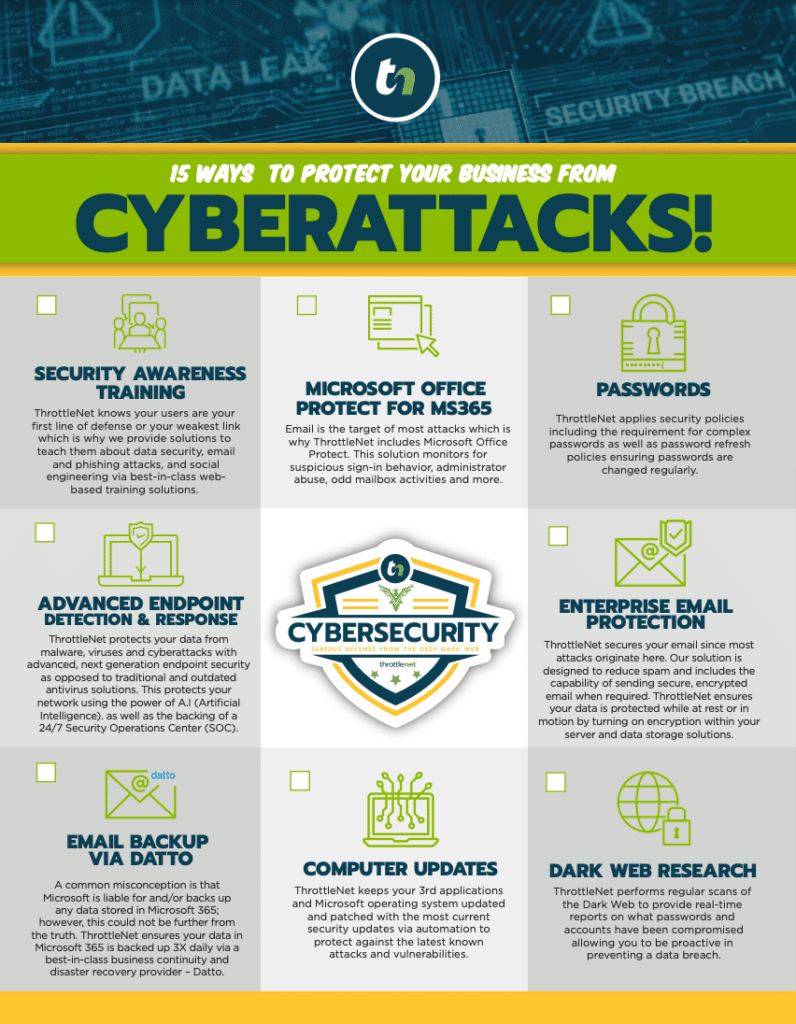
1. Keep Your Programs and Systems Up to Date
This may sound basic, but it’s one of the most overlooked aspects of network security management. Many cyberattacks exploit outdated software with known vulnerabilities.
Keeping your operating systems, third-party applications, and network devices current ensures you’re protected against the latest security threats. Software updates often include critical patches that close the very holes hackers rely on to gain access.
To improve efficiency:
- Enable automatic updates for all systems where possible.
- Schedule routine patch management checks for servers and endpoints.
- Replace unsupported hardware and software that no longer receive updates.
Businesses that partner with ThrottleNet gain peace of mind through 24/7 proactive monitoring and automated patch management. Our system ensures your network is always running the latest versions, reducing the risk of cyberattacks without disrupting daily operations.
2. Use Stronger Passwords and Enforce Smart Authentication Policies
Weak passwords are the easiest way for hackers to infiltrate a business network. A recent Verizon Data Breach Report found that over 80% of data breaches involve stolen or weak credentials.
To counter this, companies must enforce strong password and authentication policies.
A secure password should:
- Contain at least 8–12 characters
- Include uppercase and lowercase letters, numbers, and special symbols
- Avoid dictionary words, names, or predictable patterns
In addition, consider implementing:
- Multi-Factor Authentication (MFA): Even if a password is compromised, MFA adds another layer of verification.
- Password expiration policies: Require employees to change passwords every 60–90 days.
- Password managers: These tools help users store and manage strong passwords securely.
At ThrottleNet, we go a step further by integrating Microsoft 365 account protection and administrator password rotation into our managed IT services. This prevents unauthorized access and ensures credentials are never left vulnerable.
3. Filter Inbound and Outbound Network Traffic
Email remains the number one entry point for malware, phishing attempts, and ransomware. Businesses must monitor both inbound and outbound communication to protect employees, customers, and data.
By deploying email filtering solutions, you can block spam, detect phishing attempts, and quarantine suspicious attachments before they reach an inbox. Outbound filtering is equally important—it prevents infected devices on your network from spreading malware to clients or external partners.
ThrottleNet implements AI-driven email protection tools that scan every message in real time, flagging potential risks instantly. Combined with user security training, these systems dramatically reduce the likelihood of a successful phishing or ransomware attack.
For small businesses, these layers of protection often mean the difference between a normal workday and a catastrophic data loss event.
4. Install and Maintain Antivirus Software and Firewalls
Your first line of defense against viruses, spyware, and malicious network activity is a strong antivirus program paired with a properly configured firewall.
A firewall acts as a gatekeeper, monitoring traffic entering and leaving your network. It can automatically block suspicious or unauthorized connections. Antivirus software, on the other hand, detects and removes threats that slip through other defenses.
To keep your protection strong:
- Install antivirus software on every device, including laptops and mobile endpoints.
- Schedule automatic scans and frequent updates.
- Configure firewalls to block unnecessary open ports.
- Review firewall rules regularly to ensure they match your security policies.
ThrottleNet’s managed cybersecurity services include next-generation endpoint protection, ransomware detection, and 24/7 Security Operations Center (SOC) monitoring—catching threats before they impact your business. With our $500,000 Cybersecurity Protection Guarantee, clients can trust that their networks are truly safeguarded.
Bonus Tip: Partner with a Managed IT Provider
Even the most security-conscious businesses can’t stay ahead of every new threat on their own. That’s where a managed IT service provider (MSP) like ThrottleNet makes all the difference.
By outsourcing your network management and cybersecurity monitoring, you gain access to:
- A full team of certified IT professionals
- 24/7 proactive monitoring and response
- Regular security audits and compliance checks
- Data backup and disaster recovery planning
- Strategic technology planning through a dedicated vCIO
ThrottleNet’s clients enjoy an average 2-minute response time and 93% same-day issue resolution—the fastest in the Midwest. Our mission is simple: keep your network running smoothly, securely, and efficiently so you can focus on running your business.
The Bottom Line
Improving network security isn’t a one-time project—it’s an ongoing process. Cyber threats evolve daily, and businesses that fail to adapt often find out too late that their defenses were outdated.
By following these tips—keeping systems updated, using strong passwords, filtering communications, and maintaining antivirus protection—you’ll dramatically reduce your risk exposure.
When you’re ready to take the next step, ThrottleNet is here to help. We design and manage bulletproof network security solutions that give businesses confidence and control over their technology.
Protect your operations, your customers, and your future.
📞 Contact ThrottleNet today to learn how we can help you start improving network security in your business.