

Computer hacking and cybersecurity breaches have become a part of everyday headlines. What once felt like a distant concern for large corporations or government agencies is now a pressing reality for small and mid-sized businesses across the U.S.
From stolen data and ransomware to impersonation scams and phishing attacks, modern hackers have one goal: access your systems, your money, or your customers’ information.
So ask yourself: Could my business be hacked?
If you’re unsure—or if your answer starts with “probably not”—you might already be at risk.
🧠 The Global Threat Landscape: Why No One Is Immune
Not long ago, cybersecurity firm Mandiant exposed a massive wave of attacks allegedly tied to foreign governments. These hackers targeted Fortune 500 companies, universities, and even U.S. government infrastructure. They weren’t just stealing passwords—they were harvesting intellectual property, product blueprints, and private communications to gain a competitive advantage.
And it’s not just overseas actors. In recent years, vulnerabilities in widely used software like Adobe, Microsoft 365, and Java have been exploited to access networks around the world—including businesses right here in the Midwest.
Even major brands like Apple and Google regularly release emergency patches to fix newly discovered flaws.
If companies with billion-dollar cybersecurity budgets can be compromised, what about yours?
🎯 How Hackers Target Small and Mid-Sized Businesses
Many small businesses assume they’re too small to be noticed. Unfortunately, that’s exactly why they’re prime targets.
Hackers know that smaller organizations often have fewer defenses, outdated software, or no full-time IT team watching over their systems. In fact, 43% of all cyberattacks now target small businesses, according to the Verizon Data Breach Investigations Report.
One of the most common—and devastating—methods is spear phishing.
This attack involves personalized, believable emails crafted to trick employees into revealing sensitive information or clicking malicious links.
Here’s how it works:
- A hacker researches your company online. They find public information about executives, staff, or vendors.
- They create a fake email account—like [email protected] instead of [email protected].
- They send convincing messages that look like they’re from your boss or finance team, often with urgent instructions or attachments.
- Once opened, those attachments or links install malware or redirect users to fake login portals that capture passwords.
Within hours, your network, email, and data can be compromised—and you may not even realize it.
⚠️ Real-World Example: The Cost of One Click
ThrottleNet recently worked with a regional company whose employee unknowingly opened a seemingly harmless “invoice” attachment. In minutes, ransomware encrypted the company’s shared drive. Operations halted for nearly two days before they called us.
Because they hadn’t yet implemented a proper backup and recovery system, they risked permanent data loss.
Fortunately, our cybersecurity team was able to restore their data from a shadow copy and deploy next-generation endpoint protection to prevent future breaches.
It’s a stark reminder: all it takes is one employee and one click to compromise an entire organization.
🧩 Could My Business Be Hacked? Signs You’re at Risk
If any of these apply to your company, your cybersecurity posture needs urgent attention:
- You rely solely on antivirus software (no 24/7 threat monitoring)
- Your staff hasn’t completed cybersecurity awareness training
- You have no documented disaster recovery plan
- You reuse passwords or lack multi-factor authentication (MFA)
- Your systems aren’t automatically patched or updated
- You don’t perform regular network security audits
- Your IT provider only reacts to problems instead of preventing them
A single gap in any of these areas can open the door for attackers.
🔍 How to Prevent Your Business from Being Hacked
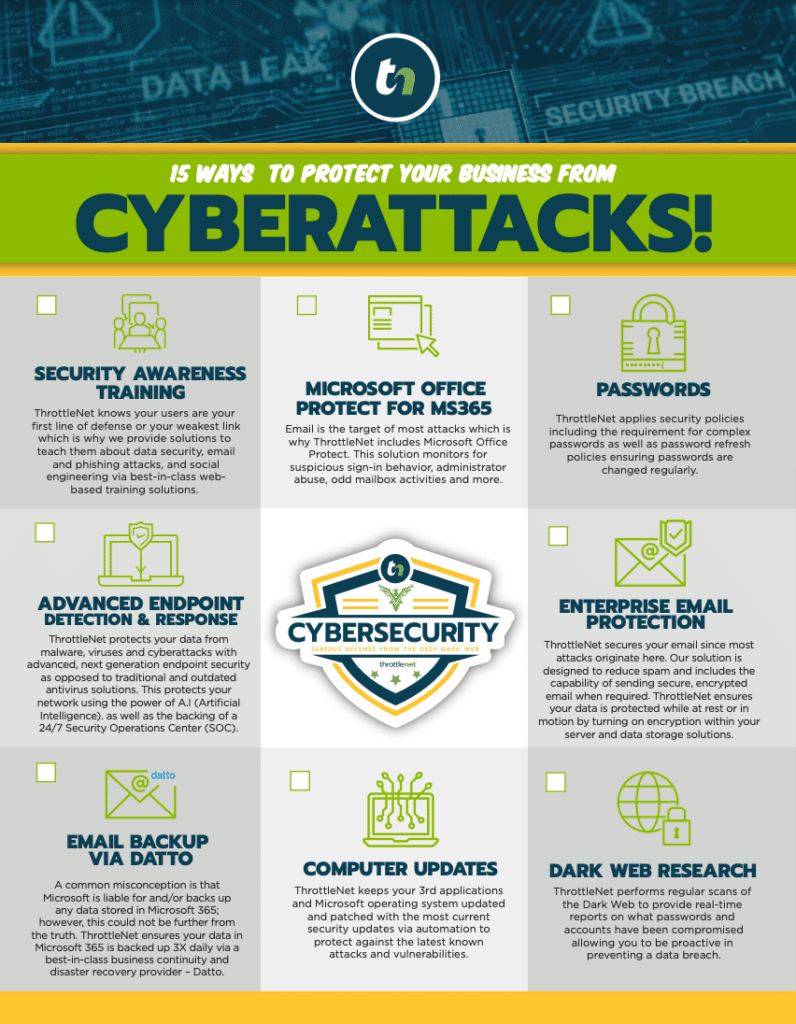
Protecting your company starts with awareness—and continues with expert management. Here’s what ThrottleNet recommends for every St. Louis business:
1. Conduct a Cybersecurity Audit
A professional audit identifies vulnerabilities across your network, cloud systems, and devices. It reveals whether your antivirus is up to date, your firewall is configured correctly, and your backups are actually working.
ThrottleNet’s vCIO consulting service provides this level of strategic oversight—aligning cybersecurity priorities with your business goals.
2. Implement Multi-Layer Security
A single software tool isn’t enough. Businesses need multi-layered protection, including:
- Advanced threat detection and AI-based antivirus
- 24/7 persistent threat monitoring
- Firewall and patch management
- Endpoint detection and response (EDR)
- Email and spam filtering
- Ransomware protection with real-time alerts
ThrottleNet’s 24/7 Security Operations Center (SOC) monitors and responds to these threats before they impact your systems.
3. Train Your Team
The majority of breaches stem from human error. Regular cybersecurity training helps employees spot phishing attempts and avoid risky clicks.
ThrottleNet includes user security training and simulated phishing campaigns in every managed service plan.
4. Regularly Update and Patch Systems
Outdated software is a hacker’s best friend. Automatic updates and managed patching ensure your systems stay ahead of known vulnerabilities.
5. Back Up and Verify Data
Even the best defenses can fail. ThrottleNet’s automated backup verification and disaster recovery solutions ensure your business can recover quickly without paying ransom or losing critical data.
🛡️ Why Partnering with a Managed IT Provider Matters
Technology changes faster than most in-house teams can keep up with. A Managed Service Provider (MSP) like ThrottleNet offers continuous oversight, expert engineering, and proactive defense against emerging threats.
With 90-second response times, 93% same-day ticket resolution, and a $500,000 Cybersecurity Protection Guarantee, ThrottleNet provides enterprise-grade protection for St. Louis and Kansas City businesses without the enterprise price tag.
We go beyond traditional IT support to deliver:
- 24/7 monitoring and management
- Virtual CIO strategy and budgeting
- Vendor and compliance management
- AI-driven threat intelligence
- Cloud and Microsoft 365 support
When you ask, “Could my business be hacked?”—our goal is to make sure the answer is no.
💬 Final Thought: Awareness Is Your First Line of Defense
Every business, no matter how big or small, is a potential target. But being proactive changes everything. With the right strategy, continuous monitoring, and expert guidance, you can transform your company from a likely victim into a cybersecurity success story.
Don’t wait until your business becomes the next headline.
Let ThrottleNet safeguard your future with proven managed IT and cybersecurity services.
📞 Call 866-792-3250 or visit www.ThrottleNet.com to schedule your free cybersecurity assessment today.