
Running a healthcare practice in O’Fallon requires a unique kind of balancing act. On one hand, you are dedicated to patient care—improving lives, managing treatments, and serving the St. Charles County community. On the other, you are managing a business that holds some of the most sensitive data on the planet: Protected Health Information (PHI).
For many local dentists, chiropractors, and private physicians, the acronym “HIPAA” (Health Insurance Portability and Accountability Act) often induces a mix of confusion and anxiety. It feels like a massive federal weight resting on the shoulders of a small local office.
Here is the reality that many national guides won’t tell you: You don’t need a massive hospital budget to achieve compliance. You simply need to translate these federal regulations into practical, local IT realities.

The “Small Practice” Myth: Why You Are a Target
There is a dangerous misconception floating around many office breakrooms in the Midwest: “We’re just a small family practice. Hackers are looking for the big hospital systems, not us.”
The data tells a starkly different story. Research indicates that approximately 98% of small healthcare practices are unknowingly non-compliant with HIPAA regulations. Cybercriminals know this. They view small practices as “soft targets”—organizations with valuable data but fewer locks on the doors than large institutions.
When a ransomware attack hits a small clinic, it doesn’t just mean a regulatory fine; it often means a total work stoppage. Imagine being unable to access patient schedules, history, or billing systems for days. It’s not just about following the law; it’s about ensuring your business can actually open its doors tomorrow morning.
HIPAA Decoded: What It Actually Means for Your IT Stack
If you read the official HHS.gov website, you’ll find thousands of pages of legal text. Let’s strip away the jargon and look at what the HIPAA Security Rule actually demands of your technology.
Think of your IT environment like a physical medical records room.
1. Technical Safeguards (The Digital Locks)
Just as you wouldn’t leave a filing cabinet unlocked in the waiting room, you cannot leave digital files accessible. This covers:
- Access Control: Ensuring only authorized staff can log in (unique usernames, not shared passwords).
- Encryption: Scrambling data so that even if it is stolen, it cannot be read.
- Audit Controls: Having a digital log that tracks who opened which file and when.
2. Physical Safeguards (The Office Doors)
This refers to the physical protection of the devices that hold the data.
- Are your servers kept in a locked room?
- Do laptop screens face away from the public waiting area?
- How do you dispose of old hard drives? (Hint: You can’t just throw them in the dumpster).
3. Administrative Safeguards (The Staff Rules)
This is about policy and training. It’s the “human element” of cybersecurity.
- Do you have a designated security officer?
- Does your staff undergo regular security awareness training?
- Do you have a plan for when (not if) a security incident occurs?
5 Hidden IT Risks in O’Fallon Medical Offices
Based on assessments of local practices, we often see the same five vulnerabilities popping up. These are the “silent” risks that lead to failed audits or data breaches.
1. The “Front Desk” Email
The Risk: A receptionist emails a patient their lab results using a standard, free email service or a basic Outlook setup without encryption.The Reality: Standard email is like sending a postcard through the mail; anyone handling it along the way can read it. The Solution: You need Managed IT Services that implement specialized email encryption. This ensures that the only person who can read the message is the intended recipient.
2. The “Guest” Wi-Fi
The Risk: To be hospitable, you give patients the Wi-Fi password. The problem? It’s the same network your EMR (Electronic Medical Records) system uses.The Reality: A patient with an infected laptop connected to your network can inadvertently spread malware to your server.The Solution: Network segmentation. Your IT support should create a “walled garden” for guests that is completely separate from your business data.
3. The “Bring Your Own Device” (BYOD) Dilemma
The Risk: Doctors and nurses check schedules or patient notes on their personal iPhones.The Reality: If that phone is lost or stolen, and it isn’t encrypted or password-protected, you have a reportable data breach.The Solution: Mobile Device Management (MDM). This allows you to remotely wipe business data from a lost phone without deleting the employee’s personal photos.
4. The “Set It and Forget It” Backup
The Risk: You have a backup drive plugged into the server. You think you’re safe.The Reality: Modern ransomware seeks out attached backups and encrypts them too. If your backup isn’t “air-gapped” or cloud-redundant, it may be useless when you need it most.The Solution: A robust business continuity plan that includes off-site, verified backups.
5. The “Generic” IT Guy
The Risk: You hire a friend of a friend who is “good with computers” to fix issues when they break.The Reality: Under HIPAA, your IT provider is a Business Associate. If they cause a breach and you don’t have a signed Business Associate Agreement (BAA) with them, you are liable for their negligence.The Solution: Partnering with a dedicated Managed Service Provider (MSP) that understands healthcare compliance and signs a BAA without hesitation.
Your O’Fallon HIPAA Vetting Guide
Not all IT support is created equal. When vetting a partner to help protect your O’Fallon practice, look for these differentiators.
Ask: “What is your average response time?”
In healthcare, speed matters. If your network goes down, patient care stops. Look for providers who offer industry-leading metrics, such as an average chat response time of just 90 seconds. You cannot afford to wait four hours for a call back when your EMR is frozen.
Ask: “Do you have specialized teams, or just generalists?”
Cybersecurity is too complex for a “jack-of-all-trades.” The best protection comes from a partner that separates their help desk (who fixes printers) from their Cybersecurity Team (who hunts threats). This specialization ensures that while one team keeps you running, another keeps you safe.
Moving From Panic to Protected
Achieving HIPAA compliance isn’t a one-time project; it’s an ongoing culture. However, you can take immediate steps to improve your posture today.
- Conduct a Risk Assessment: You cannot fix what you don’t measure. A third-party assessment will show you exactly where your digital doors are unlocked.
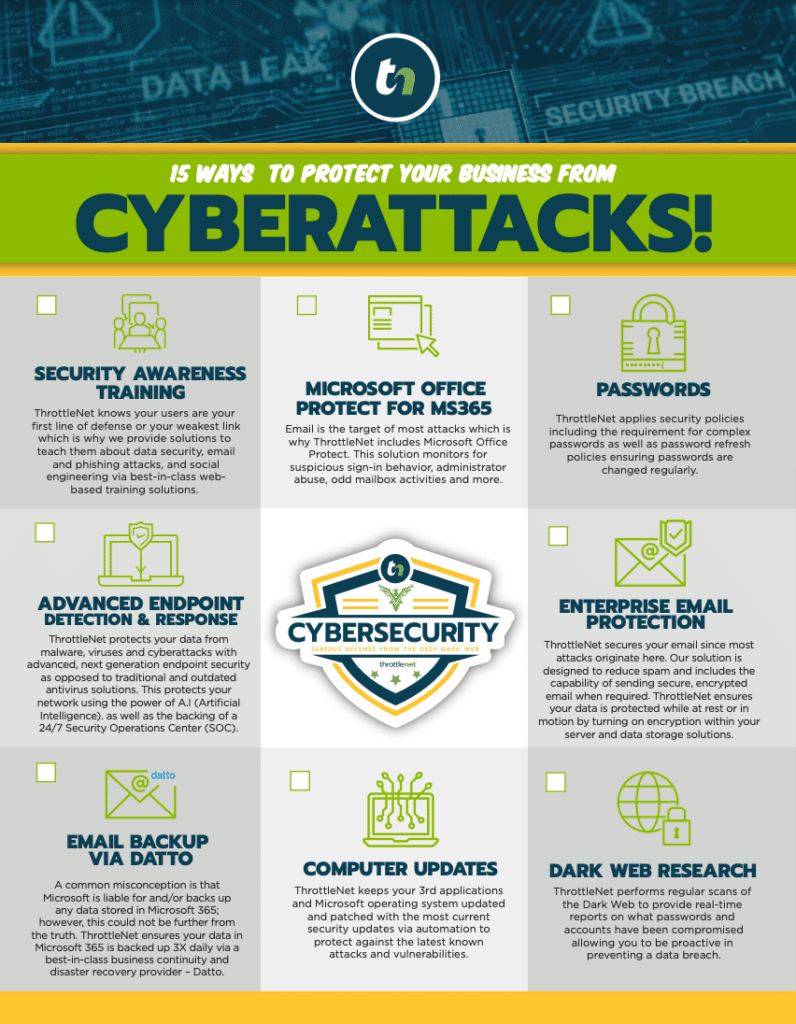
- Train Your Team: Your receptionist is your first line of defense against phishing. Regular, bite-sized training turns your staff into a “human firewall.”
- Strategic Planning: Don’t just fix broken computers. Work with a vCIO (Virtual Chief Information Officer) to create a technology roadmap. This helps you budget for upgrades and security measures before they become emergencies.
Frequently Asked Questions
Is Gmail HIPAA compliant?
Standard, free Gmail is not HIPAA compliant. However, the paid version (Google Workspace) can be made compliant if you sign a BAA with Google and configure specific security settings like encryption and two-factor authentication.
Do I need IT support if I use cloud-based EMR?
Yes. While the cloud provider secures the server, you are responsible for securing the devices that access it (laptops, tablets), the network traffic (Wi-Fi), and the user credentials (passwords). This is known as the “Shared Responsibility Model.”
What is the difference between Managed IT and Co-Managed IT?
Managed IT is when an outside firm handles all your technology needs. Co-Managed IT is ideal for larger practices that have an internal IT person but need extra help with cybersecurity, 24/7 monitoring, or strategic planning. Both models can help ensure HIPAA compliance.
You entered the healthcare field to help people, not to become a cybersecurity expert. By partnering with a local IT team that understands the O’Fallon landscape and the nuances of federal regulation, you can turn technology from a liability into an asset.
Don’t wait for an audit to check your defenses. Take a proactive approach to your patient data, your reputation, and your peace of mind.