
For many St. Louis business owners, the phrase “data privacy compliance” conjures up images of massive international corporations battling European regulators, or Silicon Valley tech giants testifying before Congress. It feels distant. It feels like a “big business” problem.
But ask a local healthcare practice manager in Fenton or a manufacturing CFO in Maryland Heights, and you’ll get a different story.
The reality of doing business now is that data privacy laws and IT compliance standards have trickled down. They no longer apply only to the Fortune 500. Whether you run a law firm in Clayton or a logistics company in Earth City, your business is likely holding sensitive data—and there are specific rules about how you must protect it.
The challenge for St. Louis Small to Mid-sized Businesses (SMBs) is that these rules aren’t always clear. Unlike California or New York, Missouri doesn’t have a single, headline-grabbing state privacy law. This creates a false sense of security.
This guide is designed to demystify the compliance landscape for the St. Louis market. We’ll look at why local businesses are increasingly being held to higher standards, how to distinguish between “security” and “privacy,” and how strategic leadership—specifically through a Virtual CIO (vCIO)—can turn compliance from a headache into a competitive advantage.

The St. Louis Compliance Puzzle: What You Actually Need to Know
If you search for “Missouri Data Privacy Law,” you might come up empty-handed regarding a comprehensive “GDPR-style” state act. This is the first piece of the puzzle that confuses local business owners.
Here is the nuance: While Missouri does not currently have a comprehensive consumer privacy act like the CCPA (California Consumer Privacy Act), that does not mean St. Louis businesses are unregulated.
Instead of one single law, St. Louis SMBs face a regulatory patchwork. You are likely governed by a combination of:
- Federal Regulations: Depending on your industry (HIPAA for healthcare, GLBA for finance).
- Industry Standards: Rules set by governing bodies (PCI DSS for accepting credit cards).
- Contractual Compliance: Requirements mandated by your clients or insurance providers.
- Cross-State Reach: If you have customers in states with strict laws (like Illinois or California), you may be subject to their rules, regardless of where your HQ is located.
Data Privacy vs. IT Security: What’s the Difference?
Before diving deeper, it is critical to distinguish between these two concepts, as they are often used interchangeably but require different approaches.
- IT Security is the “lock on the door.” It involves the technical tools—firewalls, antivirus, Multi-Factor Authentication (MFA)—that prevent unauthorized access to your systems.
- Data Privacy is the “house rules.” It dictates what data you collect, why you collect it, how long you keep it, and who is allowed to see it once they are inside.
You can have security without privacy (your data is locked up, but you’re collecting it illegally), but you cannot have privacy without security.
Beyond State Law: The “Invisible” Rules Governing Your Business
If the state legislature hasn’t passed a sweeping privacy bill, who is telling you what to do? For most St. Louis SMBs, the pressure comes from three specific directions.
1. The Insurance Mandate
This is the most common “aha moment” we see with new clients. You may apply for Cyber Liability Insurance to protect your business, only to find the carrier demands specific IT protocols. Insurers are now requiring Multi-Factor Authentication (MFA), encrypted backups, and specific incident response plans before they will bind a policy. If you don’t comply, you don’t get insured.
2. The Supply Chain Pressure
St. Louis is a hub for manufacturing and logistics. If your business acts as a vendor for a larger entity (like Boeing, a major hospital system, or a federal agency), those large partners will enforce their compliance standards on you. They need to know that their data is safe when it passes through your network. We are seeing more contracts requiring SOC 2 attestation or adherence to NIST (National Institute of Standards and Technology) frameworks.
3. The Specifics of Your Industry
- Healthcare (Fenton, Chesterfield, City): HIPAA is non-negotiable. It protects Protected Health Information (PHI).
- Finance & Legal (Clayton, Downtown): Firms handling sensitive financial data are subject to the GLBA (Gramm-Leach-Bliley Act) and strict ethics rules regarding client confidentiality.
- Retail & Hospitality: Any business swiping a card must adhere to PCI DSS standards to avoid fines and liability.
A Local Story: The “Too Small to Target” Myth
A common objection we hear is, “We’re just a small family practice in Fenton; nobody is trying to hack us.”
Let’s look at a genericized example of a real-world scenario common in our region. Consider a specialized healthcare clinic in South County. They assumed that because they weren’t a massive hospital system, their basic antivirus and firewall were “good enough” for HIPAA compliance.
The Reality Check:
Cybercriminals use automated bots to scan the internet for vulnerabilities. They don’t care if you are a Fortune 500 company or a 10-person clinic; they care if your door is unlocked.
The clinic faced a ransomware attack not because they were specifically targeted, but because they were vulnerable. Beyond the immediate crisis of encrypted files, they faced a secondary nightmare: Compliance Failure. Because they hadn’t performed a proper Risk Analysis (a HIPAA requirement) or encrypted their patient database, they faced potential regulatory fines and a massive breach of patient trust.
The Turnaround:
This is where IT shifts from “fixing computers” to “business strategy.” By bringing in a strategic partner, the clinic was able to:
- Conduct a Gap Analysis to see where they failed HIPAA standards.
- Implement Managed IT Services to monitor the network 24/7.
- Establish an Incident Response Plan.
The result wasn’t just “better tech”—it was the ability to tell their patients (and regulators), “We are secure, compliant, and open for business.”
The Strategic Role of a vCIO in Compliance
Navigating this patchwork of rules requires more than just installing software. It requires a strategy. This is where a Virtual Chief Information Officer (vCIO) becomes indispensable for St. Louis SMBs.
Most small businesses cannot afford a full-time, six-figure CIO. However, relying solely on a “break-fix” IT guy leaves a strategic gap. A vCIO fills that gap by looking at your business not just as a collection of servers, but as an organization with goals and risks.
How a vCIO Tackles Compliance:
- Quarterly Roadmaps: Instead of reacting to problems, the vCIO plans months out, budgeting for compliance upgrades so they don’t surprise you.
- Policy Management: They help draft the Acceptable Use Policies and Bring Your Own Device (BYOD) policies that regulators look for.
- Vendor Management: The vCIO ensures your third-party vendors are also meeting your compliance standards.
- Documentation: In the event of an audit, having a paper trail of your security measures is your best defense. A vCIO ensures this documentation is always up to date.
5 Common Compliance Myths Putting St. Louis SMBs at Risk
To build a compliant business, we first have to dismantle the misconceptions that leave companies vulnerable.
Myth 1: “We’re too small to be fined.”
Fact: While massive fines hit the news, small businesses face fines that are proportionate but often business-ending. Furthermore, the cost of a data breach (averaging hundreds of thousands of dollars) often exceeds the fines.
Myth 2: “My IT guy handles compliance.”
Fact: Your IT support handles security. Compliance is a legal and operational framework. While IT executes the security, the business leadership (guided by a vCIO) must define the compliance strategy.
Myth 3: “We have a firewall, so we’re compliant.”
Fact: Technology is only one pillar of compliance. Most regulations also require physical safeguards (locked server rooms) and administrative safeguards (employee training, policies, and risk assessments).
Myth 4: “We don’t do business in California or Europe.”
Fact: As mentioned, federal regulations and insurance mandates apply regardless of your location. Additionally, if a St. Louis resident travels to California and transacts with you online, jurisdiction can get murky. Best practice is to aim for a high standard of privacy regardless of geography.
Myth 5: “Compliance is a one-time project.”
Fact: Compliance is a posture, not a project. Laws change, threats evolve, and your business grows. What was compliant in 2023 may be insufficient in 2025.
Your St. Louis SMB Compliance Action Plan
If you are unsure where your business stands, here is a simplified checklist to start the conversation with your leadership team or IT partner.
Phase 1: Assessment
- Identify your data: What sensitive info do you hold? (Credit cards, SSNs, health records, proprietary designs).
- Map your regulations: Are you HIPAA? NIST? PCI?
- Check your insurance: Pull your cyber liability policy and verify you are actually meeting the requirements you signed off on.
Phase 2: Implementation
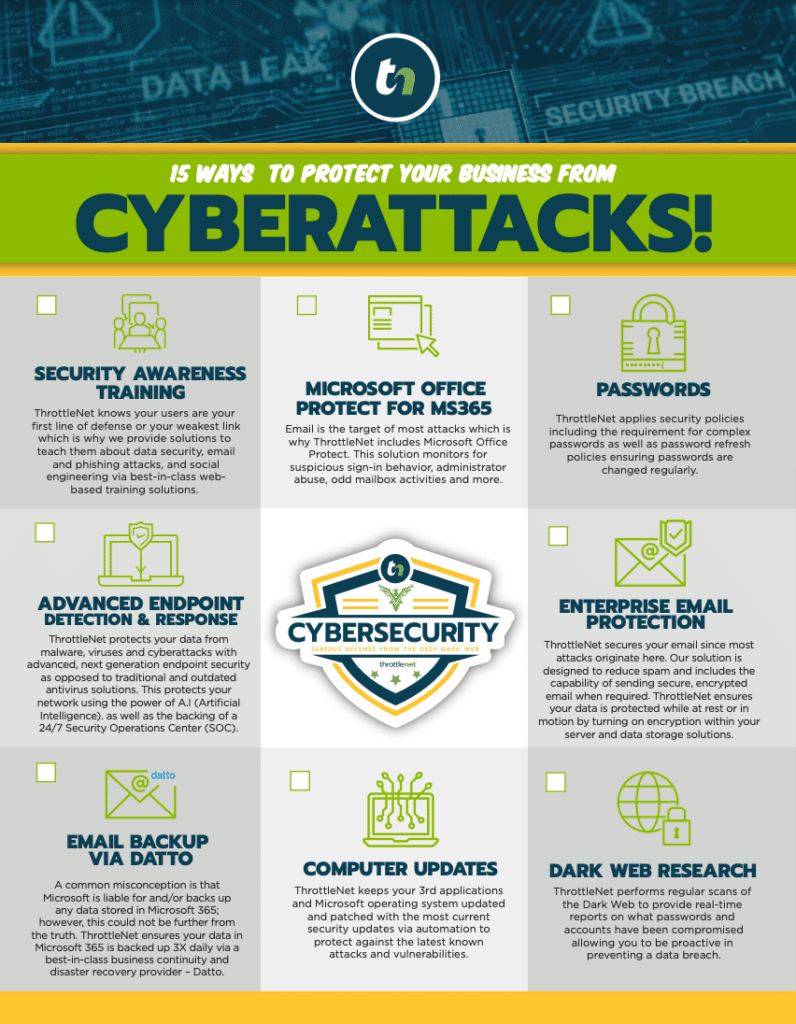
- Enable MFA: Turn on Multi-Factor Authentication for email, remote access, and banking.
- Encrypt Data: Ensure laptops and mobile devices are encrypted in case of theft.
- Review User Access: Does the intern still have access to the financial folder? Implement “Least Privilege” access.
Phase 3: Strategy & Culture
- Employee Training: Human error is the #1 cause of breaches. Train staff on phishing and social engineering.
- Engage a vCIO: Move beyond break-fix support. Specific strategy meetings help to align IT with your business goals.
Frequently Asked Questions (FAQ)
Q: If Missouri passes a data privacy law in the future, will I have to change everything?
A: If you are following best practices now (NIST frameworks, strong encryption, clear privacy policies), a new state law will likely only require minor adjustments to your documentation, rather than a total overhaul of your IT.
Q: What is the most common compliance failure for St. Louis businesses?
A: Lack of documentation. Many businesses are doing the right things technically, but they can’t prove it during an audit or insurance claim because they lack documented policies and incident response plans.
Q: Can I handle IT compliance internally?
A: It is possible, but difficult. It requires a dedicated staff member who understands both the legal landscape and technical network security. For most SMBs, Co-Managed IT or fully Managed Services is more cost-effective.
Q: How much does it cost to become compliant?
A: The cost of compliance varies by industry, but it is always less expensive than the cost of non-compliance (fines, lawsuits, and reputation damage). A vCIO can help budget these costs over time so they are manageable operational expenses.
Taking the Next Step
Data privacy and compliance aren’t just about avoiding fines—they are about building a resilient, trustworthy business. In a tight local market like St. Louis, your reputation is your most valuable asset. Protecting your client’s data is the best way to protect that reputation.
If you are unsure about your current risk level, or if your current IT support feels more “reactive” than “strategic,” it may be time to assess your foundation. You don’t have to navigate the regulatory patchwork alone.