
Every day, thousands of businesses are targeted by a familiar cyberthreat: the phishing message. It might look like a normal email from a bank, a vendor, or even your CEO — but one careless click can expose sensitive company data or install malware that disrupts your entire network.
Phishing remains one of the most common and successful methods hackers use to infiltrate business systems. It preys on human nature — curiosity, trust, and urgency. According to recent cybersecurity research, more than 90% of data breaches begin with some type of phishing message.
This guide explains what a phishing message looks like, why it works, and how to protect your company from becoming the next victim. With the right awareness and safeguards in place, your business can become a “No Phishing Zone.”
What Is a Phishing Message?
A phishing message is a type of social engineering scam where cybercriminals impersonate trusted individuals or organizations to trick recipients into sharing private information. These deceptive communications may arrive via email, text, or even voice call.
The sender might appear to be:
- Your financial institution or credit card company
- A known vendor requesting an invoice payment
- Your HR or payroll department asking to “verify” credentials
- A coworker or manager sharing an urgent file
The goal is simple: to get you to click a malicious link, open an infected attachment, or provide confidential data like passwords or account details.
Once the attacker gains that information, they can:
- Access your systems or financial accounts
- Steal customer or employee data
- Deploy ransomware or malware
- Impersonate your company in further scams
Phishing messages often mimic legitimate communications so convincingly that even experienced employees can mistake them for the real thing.
Why Phishing Messages Are So Effective
Phishing messages work because they manipulate emotion and routine. They appear during a busy day, framed as urgent or important, pushing recipients to act before thinking.
Common tactics include:
- Urgency: “Your account has been locked. Reset your password immediately.”
- Authority: “This is your CEO. Please process this wire transfer today.”
- Fear: “Your tax filing has been flagged. Open the attached document.”
- Curiosity: “You’ve received a secure document. Click here to view it.”
Attackers rely on the fact that most people trust familiar names or brands. A phishing message that looks like it’s from a real supplier or service provider has a much higher chance of success.
How to Spot a Phishing Message
No matter how sophisticated the scam, most phishing messages leave clues. Here’s what to look for:
- Unexpected Requests – Be cautious of any message asking for passwords, payment details, or account verification.
- Suspicious URLs – Hover over links before clicking. Fake websites often use slight misspellings (e.g., paypa1.com instead of paypal.com).
- Generic Greetings – “Dear User” or “Valued Customer” instead of your name.
- Poor Grammar or Typos – Many phishing messages originate from overseas and contain language errors.
- Unfamiliar Senders – The name may look correct, but the email address often reveals the scam (e.g., @company-support.com instead of @company.com).
- Unexpected Attachments – If you weren’t expecting a document or invoice, don’t open it until confirming it’s legitimate.
If something feels off, trust your instincts — and verify before acting.
The Many Faces of a Phishing Message
Phishing has evolved far beyond basic email scams. Businesses today face several variations, including:
Spear Phishing
A highly targeted phishing message tailored to specific individuals or companies, often using personal details from LinkedIn or company websites.
Smishing (SMS Phishing)
Phishing messages sent through text, often appearing to come from delivery services or banks. They usually contain a link to a fake login page.
Vishing (Voice Phishing)
Phone calls where attackers impersonate IT staff or executives to gain access credentials or financial details.
Clone Phishing
An authentic-looking copy of a legitimate email — but with malicious links swapped in.
Business Email Compromise (BEC)
Sophisticated scams where hackers impersonate executives to approve fraudulent wire transfers or send fake vendor payments.
No matter the type, each phishing message is designed to bypass technical defenses and exploit human behavior.
The Real Cost of Falling for a Phishing Message
The fallout from a single phishing message can be devastating for a business.
- Financial Losses: Funds can be stolen directly through fraudulent transactions.
- Data Breaches: Compromised credentials lead to stolen customer or employee information.
- Downtime: Malware can disrupt systems, leading to productivity loss.
- Reputation Damage: Once customers lose trust, recovery can take years.
- Regulatory Fines: If sensitive information is exposed, you may face penalties under HIPAA, PCI DSS, or GDPR.
Small and mid-sized businesses are especially vulnerable because they often lack dedicated security teams or automated monitoring.
How to Protect Your Company from a Phishing Message
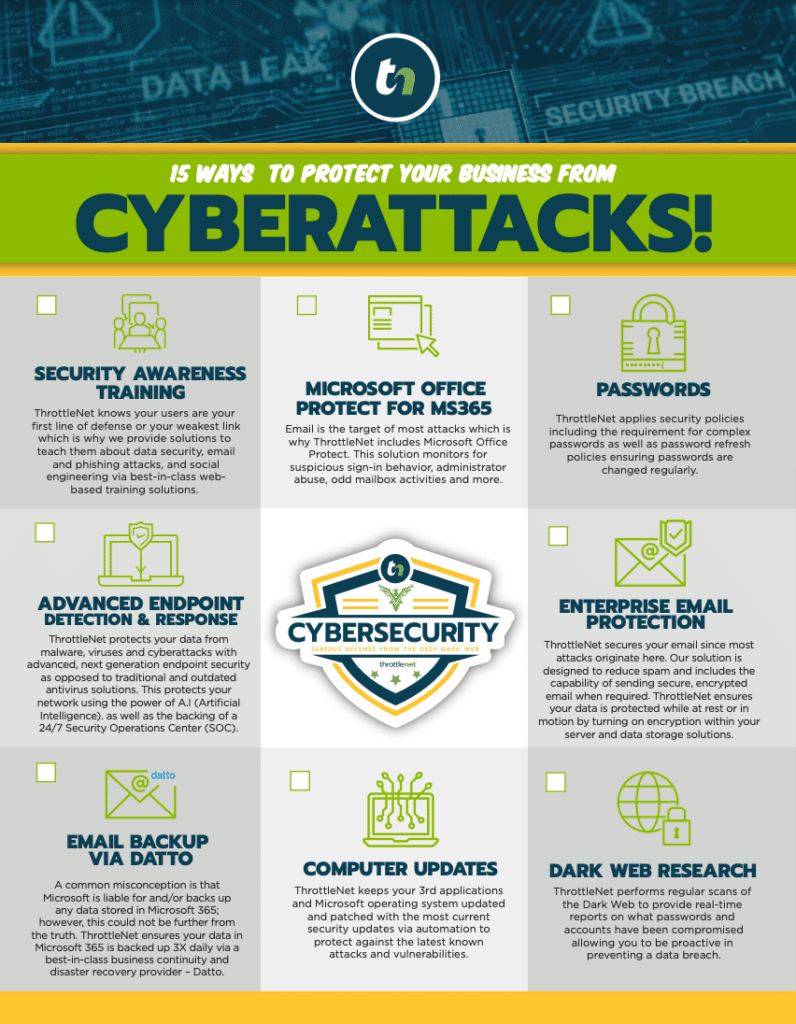
Effective protection requires both awareness and technology. Here’s how to defend your business:
1. Educate Employees Regularly
Conduct ongoing cybersecurity training that includes real examples of phishing messages. Simulated phishing tests are an excellent way to reinforce lessons.
2. Deploy Advanced Email Security
Use robust spam filters and threat detection tools that can identify suspicious messages before they reach users. ThrottleNet’s managed email protection includes multi-layered filters and continuous monitoring.
3. Use Multi-Factor Authentication (MFA)
Even if a password is compromised, MFA blocks access by requiring additional verification, such as a code from an employee’s phone.
4. Keep Software Updated
Outdated software and systems are prime targets for phishing-related malware. Regular patching closes those gaps.
5. Back Up Data Securely
Regular, encrypted backups ensure your business can recover quickly in the event of a ransomware attack.
6. Conduct External Vulnerability Audits
Proactive security testing helps identify weaknesses before hackers exploit them.
ThrottleNet’s Free External Vulnerability Audit
To help companies detect vulnerabilities early, ThrottleNet offers a complimentary External Vulnerability Audit — a detailed scan of your network, website, and email security posture.
Here’s what it covers:
- Domain Vulnerabilities: Ensures your web domain isn’t exposed to malware or spoofing attempts used in phishing messages.
- Website Weaknesses: Identifies outdated software, plugins, or potential blacklisting risks.
- Email Threats: Verifies that your mail servers use modern spam filtering and aren’t blacklisted — both common targets for phishing.
- Network Entry Points: Detects misconfigured ports or services that could provide external access for attackers.
After the audit, ThrottleNet’s team reviews your results, explains the findings in plain English, and recommends strategies to strengthen your defenses.
Why Businesses Trust ThrottleNet
ThrottleNet is more than an IT provider — we’re your partner in security and strategy. With award-winning managed IT and cybersecurity services, we help protect businesses across St. Louis and Kansas City from phishing messages, ransomware, and other cyber threats.
Our differentiators:
- Average 2-Minute Response Time – The fastest in the region.
- 93% Same-Day Resolution Rate – Most issues are solved the same day they’re reported.
- Dedicated vCIO Strategy – Expert guidance that aligns IT decisions with your business goals.
- Comprehensive Security Suite – From endpoint protection to dark web monitoring and employee training.
Our proactive approach means you don’t just react to attacks — you prevent them.
Make Your Business a “No Phishing Zone”
A phishing message doesn’t have to be convincing to be costly. One careless click can lead to stolen data, downtime, or worse. But with the right combination of employee training, automated protection, and expert oversight, your organization can stay a step ahead of attackers.
Don’t wait until your business becomes the next target.
Request your free External Vulnerability Audit from ThrottleNet and let our experts identify weak points before hackers do.
Protect your systems. Protect your people.
Make your network a No Phishing Message Zone — with ThrottleNet watching your back 24/7.