
Strong phishing defenses have never been more important, because phishing remains one of the oldest and most effective threats in cybersecurity. From ransomware to the SolarWinds breach, the cybersecurity space has been as hectic as it has ever been over the last several years. Yet for all of the emerging threats making headlines, phishing — one of the oldest pain points in the industry — continues to quietly wreak havoc and is as big of a threat as it has ever been.
Despite often being overlooked in terms of hype, phishing has been a mainstay in the threat landscape for decades. In fact, phishing and pretexting have featured in a substantial share of breaches year after year, while the majority of US organizations report experiencing a successful phishing attack within a given year. That means phishing is one of the most dangerous “action varieties” to your organization’s cybersecurity health. As a result, building proper phishing defenses through anti-phishing hygiene and best practices is an absolute must.
Effective phishing defenses do not require a massive budget or a team of analysts — they start with awareness and a few consistent habits. With that in mind, here are three quick fundamentals for dealing with phishing threats and reinforcing your phishing defenses across your entire organization.
Know the Red Flags
The first layer of any solid phishing defense is the ability to recognize a threat when you see one. Phishers are masters of making their content and interactions appealing. From content design to language, it can be difficult to discern whether a message is genuine or a potential threat, which is exactly why knowing the red flags matters so much.
Awkward and unusual formatting, overly explicit call-outs to click a hyperlink or open an attachment, and subject lines that manufacture a sense of urgency are all hallmarks that the content you received could be a phishing attempt. Misspelled domains, mismatched sender addresses, and requests for credentials or payment are equally telling. Training your team to pause and scrutinize these signals is one of the most cost-effective phishing defenses available, because the human eye remains the last line of protection when a malicious email slips past a filter.
Verify the Source
Phishing content arrives in many forms, but a large number of phishing attempts try to impersonate someone you already know — a colleague, a service provider, or a friend — as a way to trick you into believing the malicious content is trustworthy. Don’t fall for it. Source verification is one of the most reliable phishing defenses you can practice every single day.
If you sense any red flags that something may be out of place or unusual, reach out directly to the individual or organization through a known, separate channel to confirm whether the message is authentic and safe. Do not reply to the suspicious email or call the number it provides; instead, use a phone number or address you already trust. If the message turns out to be fraudulent, break off communication immediately and flag the incident through the proper channels so your IT or security team can warn others. This simple habit shuts down business email compromise and credential theft before they escalate.
Be Aware of Vishing and Other Phishing Offshoots
As more digital natives have come online and awareness of email scams has grown, bad actors have diversified their tactics well beyond the inbox. Modern phishing defenses have to account for these offshoots. Voice phishing — or vishing — has become a primary alternative for criminals looking to extract sensitive information from unsuspecting individuals. Similar to conventional phishing, vishing is typically carried out by someone posing as a legitimate organization, such as a healthcare provider, bank, or insurer, and asking for sensitive details.
Smishing (phishing via text message) and QR-code phishing are growing just as quickly. Simply put, it is imperative that individuals stay wary of any communication that asks for personal information — whether it arrives by email, phone, text, or chat — especially if it is unexpected. If anything seems suspicious, break off the interaction immediately and contact the company directly using verified contact information to confirm the legitimacy of the request. Extending your phishing defenses to cover every channel, not just email, closes the gaps attackers count on.
Building a Lasting Culture of Phishing Defenses
Phishing may be “one of the oldest tricks in the book,” but it is still incredibly effective. And although it can be hard to spot when you are in the middle of a phishing attempt, exercising caution and deploying these few fundamentals allows individuals — and organizations more broadly — to drastically reduce the chances of falling victim. The strongest phishing defenses combine employee awareness with technical controls like email filtering, multi-factor authentication, and ongoing security awareness training. You can review additional safeguards on our cybersecurity services page and managed IT services overview, and learn more about reporting fraudulent messages through the Cybersecurity and Infrastructure Security Agency (CISA).
How ThrottleNet Can Help
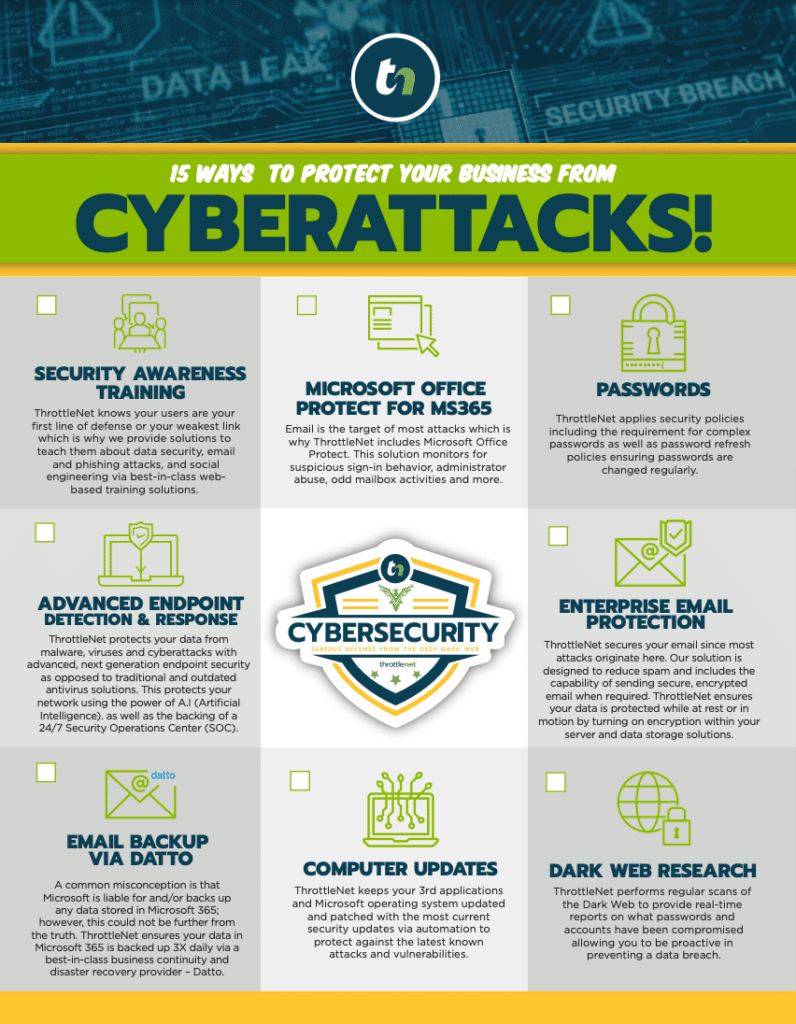
By working with cybersecurity experts like ThrottleNet, businesses can become technologically secure and compliant while strengthening their phishing defenses from end to end. Work with ThrottleNet’s cybersecurity experts to discover a solution built for your environment.
Contact us today to learn more!