

Finding cost-effective IT support for St. Louis startups is one of the smartest early moves a founder can make — and one of the most overlooked. Walk through the halls of T-REX downtown or grab a coffee near Cortex, and the energy of the St. Louis startup ecosystem is palpable. With organizations like TechSTL and Greater St. Louis Inc. fueling innovation, our region is experiencing a massive wave of entrepreneurial growth.
But behind the pitch decks and funding rounds lies a silent make-or-break challenge for every growing business: managing technology. If you’re a founder, CFO, or operations leader, you know every dollar counts. You’re likely treating IT like a utility — paying the bill and hoping the Wi-Fi stays on. But as you scale from 10 to 50 employees, that mindset becomes dangerous. A single cyber breach or network failure isn’t just an inconvenience; it can stall your momentum, cost you a vendor contract, or completely halt your operations.
This guide demystifies IT budgeting for St. Louis startups and small businesses. We’ll break down the true cost of IT, explain how to scale your infrastructure predictably, and show you how to build a cybersecurity foundation that protects your growth without draining your runway — the essence of cost-effective IT support for St. Louis startups.
The IT Growth Paradox: Why Beginners Get Tech Budgeting Wrong
Most emerging businesses fall into a common trap: they view IT solely as a cost center rather than a scalability engine. When you search for “how much does IT support cost in St. Louis,” you’re likely met with frustrating “Call for a Quote” forms or national averages that don’t reflect the Midwest market. When local providers do share numbers, they often target mid-market companies with 50+ employees, leaving the 10-to-49 employee startup demographic in the dark.
To truly understand IT budgeting, you have to look at the Total Cost of Ownership (TCO). Many founders believe they’re saving money by waiting for technology to break before paying an hourly rate to fix it. But look at the math: if a server goes down or a critical application crashes for just three hours at a 15-person startup, you aren’t just paying an emergency IT rate of $150 to $300 an hour. You’re paying for 45 hours of lost payroll, delayed deliverables, and immense frustration. Predictable IT scaling — the foundation of cost-effective IT support for St. Louis startups — prevents these growth bottlenecks.
The 3 Stages of Startup IT (And What They Actually Cost)
Think of IT support structures like housing. Depending on your growth stage, you have three primary choices: The Hotel, The Custom Build, and The High-Rise Apartment.
Stage 1: The “Break-Fix” Trap (The Hotel). You don’t have ongoing support. When something breaks, you call a local tech to fix it, paying an hourly rate (typically $75 to $300/hour in St. Louis). This is like living in a hotel: it seems flexible, but the nightly rate is exorbitant and you build no long-term equity. Break-fix providers are financially incentivized for your technology to fail, and they offer zero proactive cybersecurity — leaving you entirely exposed to ransomware.
Stage 2: The In-House “IT Guy” (The Custom Build). You hire a full-time internal IT manager to handle everything from resetting passwords to managing network security. This is like building a custom home: expensive up front and requiring constant maintenance. A competent IT manager in St. Louis commands a salary of $70,000 to $100,000+, plus benefits. More importantly, no single human can be an expert in help-desk support, cloud migrations, and enterprise cybersecurity simultaneously. You end up with a single point of failure who is often overworked and struggling to keep up with evolving threats.
Stage 3: Managed IT Services (The High-Rise Apartment). You partner with a Managed Service Provider (MSP) for a flat, predictable monthly fee. This is like leasing a luxury high-rise with a 24/7 concierge, maintenance team, and security staff. Instead of one generalist, you get a dedicated team of specialists. Flat-rate managed IT aligns your MSP’s goals with yours: they only remain profitable if your technology never breaks — which is why it’s the most cost-effective IT support for St. Louis startups aiming to scale.
The St. Louis Small Business IT Budgeting Matrix
So what should an emerging St. Louis business actually spend on technology? Industry benchmarks suggest healthy, growing businesses allocate between 2% and 7% of gross revenue to IT and cybersecurity.
If you’re transitioning into a Managed IT Services model, pricing is generally calculated per user or per device. For a startup with 10 to 49 employees, your IT investment should scale predictably alongside your headcount. While exact costs depend on your compliance needs and existing infrastructure, shifting to a Managed IT model provides comprehensive coverage — including 24/7 proactive network monitoring, remote support, and preventative maintenance — at a fraction of the cost of hiring a single internal IT employee.
Integrating Cybersecurity on a Startup Budget
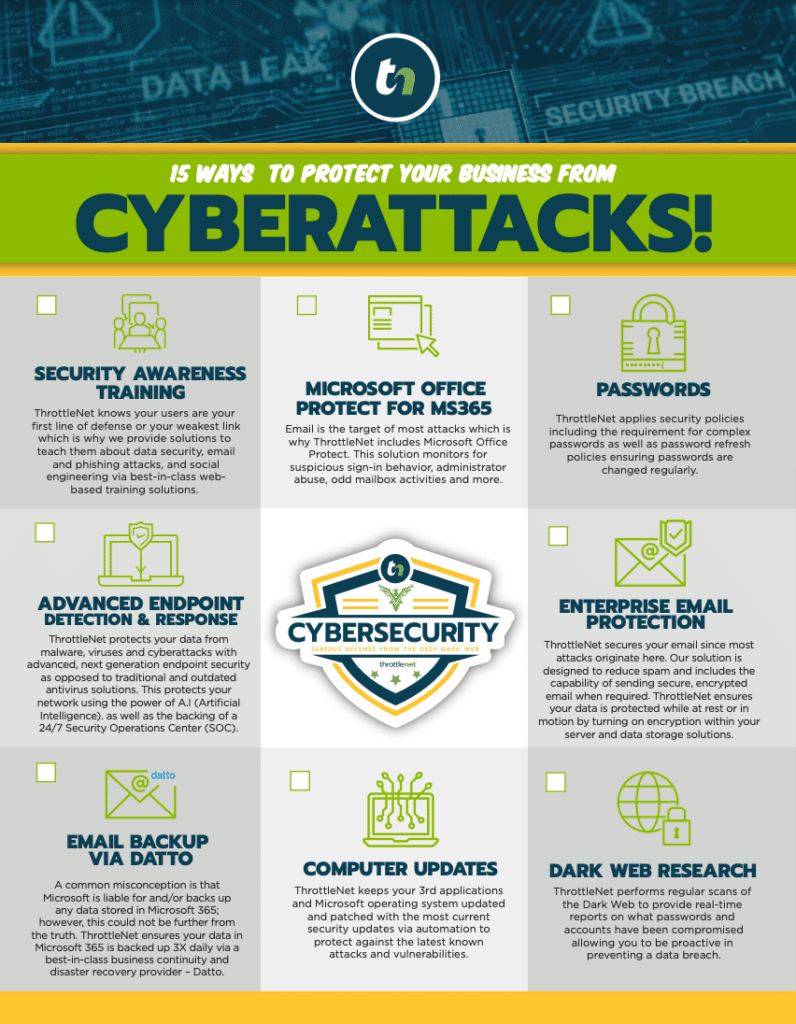
One of the most dangerous myths in the startup world is: “We’re too small to be targeted by hackers, and we use Google Workspace/Microsoft 365, so we’re already secure.” Out-of-the-box cloud software does not equal cybersecurity. Hackers increasingly target small businesses specifically because they know these organizations lack enterprise-grade defenses. For a deeper baseline, CISA’s cybersecurity resources for small businesses are a great free starting point.
Robust cybersecurity is no longer just about preventing downtime; it’s directly tied to your growth metrics:
- Appeasing Angel Investors and VCs: Before funding your next round, investors will scrutinize your intellectual property protection. A major data vulnerability can kill a deal instantly.
- Passing Vendor Audits: B2B startups aiming to land larger contracts will be required to prove they meet NIST, SOC 2, or HIPAA compliance standards.
- Lowering Insurance Premiums: Cyber liability insurers now require multi-factor authentication (MFA), next-gen endpoint protection, and verified backups before they’ll even issue a policy.
Instead of buying expensive, disjointed security software on your own, the most cost-effective solution is an MSP that embeds multi-layered cybersecurity into its core offering — the heart of truly cost-effective IT support for St. Louis startups.
The “Choosing a St. Louis MSP” Evaluation Checklist
When you’re ready to graduate from DIY tech support to a scalable partnership, how do you choose the right IT company for cost-effective IT support for St. Louis startups? Use this checklist to separate premier providers from average ones:
- Do they offer specialist teams or just generalists? Many local MSPs rely on a small team of “jack-of-all-trades” technicians. The gold standard is a provider with a multi-tiered help desk that routes your issue directly to dedicated specialists in cloud, cybersecurity, or networking.
- What are their verifiable response times? Ask for data, not promises. For context, ThrottleNet boasts a best-in-industry 90-second average response time and a 93% same-day resolution rate.
- Do they force long-term contracts? Exceptional providers don’t need to lock you into rigid 3-year agreements. Look for month-to-month options earned through consistent performance.
- Do they include an IT Strategist? You don’t just need an “account manager” to sell hardware. You need a Virtual Chief Information Officer (vCIO) — a dedicated strategist who handles budgeting, compliance, and quarterly technology roadmaps.
- Do they put their money where their mouth is? The most confident cybersecurity providers back their services financially. ThrottleNet clients, for example, are backed by an exclusive $500,000 Cybersecurity Protection Program covering ransomware, downtime, and recovery expenses.
Frequently Asked Questions
How much does IT support cost for a small business? It depends on whether you use hourly break-fix services or flat-rate Managed IT. Break-fix rates run $75–$300 per hour but carry massive hidden downtime costs. Managed IT scales predictably on a per-user basis, generally costing far less annually than a single full-time IT hire — while providing an entire team of experts. That predictability is what makes it the most cost-effective IT support for St. Louis startups.
Should we hire an IT guy or outsource? If you have fewer than 50–75 employees, outsourcing to a Managed IT Service is almost always more cost-effective and secure. You gain a 24/7 Security Operations Center (SOC), a vCIO, and specialist engineers you can’t replicate with one internal hire. If you already have an internal IT manager who’s overwhelmed, look into Co-Managed IT Services, which supplements your existing staff with high-level cybersecurity and strategy resources.
Do we need cybersecurity if we use Google Workspace or Microsoft 365? Absolutely. Google and Microsoft secure their physical servers, but you’re responsible for securing your data, managing access, and preventing phishing. Advanced email protection, routine user training, and third-party data backups are essential additions.
What is a vCIO? A Virtual Chief Information Officer (vCIO) is an executive-level IT consultant who acts as an extension of your leadership team — helping you make forward-thinking technology decisions that fuel growth, ensure compliance, and reduce long-term risk.
Your Next Steps for Scalable Growth
Your St. Louis startup is built to grow, and your technology should be too. By moving away from reactive, break-fix habits and embracing scalable, cost-effective IT support for St. Louis startups, you eliminate friction, secure your intellectual property, and empower your team to focus on innovating.
If you’re ready to see exactly where your current network stands and how much you could save with predictable, award-winning IT support, the best first step is a professional risk evaluation. Contact us today — understanding your vulnerabilities now is the key to protecting your profits tomorrow.