Walk the floor of any established manufacturing plant or distribution center in St. Louis, and you will likely see a fascinating collision of eras. In one corner, there is a multi-million-dollar CNC machine or sorting system that runs flawlessly day in and day out. In the other corner, there is the reality of the technology controlling it: an obsolete Windows 7 desktop or a legacy ERP system installed when flip-phones were still cutting edge.
For decades, St. Louis has been a historic hub for manufacturing and logistics. Today, the businesses driving this region face a unique dilemma. Your operations rely on bulletproof, decades-old specialized hardware, yet market demands—and your customers—require modern cloud connectivity, real-time data tracking, and ironclad cybersecurity.
If you search online for how to integrate these systems, you are immediately buried in enterprise software jargon like “iPaaS,” “Event Streaming,” and “APIs.” Most tech companies only want to talk about code. But what about the physical barcode scanners? What about the proprietary factory-floor machinery?
This guide strips away the academic software jargon to provide a practical, in-the-trenches look at how mid-market St. Louis businesses can bridge the gap between old hardware and new software—without suffering catastrophic downtime.

The “If It Ain’t Broke” Paradox
When an older system works dependably, the natural instinct is to leave it alone. We call this the “If it ain’t broke, don’t fix it” paradox. It is an understandable mindset for any business owner who knows that downtime equals lost revenue.
However, in the modern IT landscape, “legacy” does not just mean “old.” Legacy means inflexible.
A system doesn’t have to be physically broken to be an operational liability. If your 15-year-old on-premise server isolates data in a silo so your cloud inventory software can’t read it, it is actively costing you money. If a piece of machinery requires an outdated operating system that cannot support Multi-Factor Authentication (MFA) or modern endpoint protection, it is an open backdoor for ransomware.
Integration isn’t about replacing the machinery that built your business; it’s about eliminating the technical debt that threatens its future.
The Hardware/Software Divide: IT vs. OT
To understand why modernizing industrial systems is so difficult, we have to look at the divide between Information Technology (IT) and Operational Technology (OT).
- Information Technology (IT): The digital systems that manage your business data—your email, cloud storage, CRM, and accounting software.
- Operational Technology (OT): The physical machinery, industrial control systems (SCADA), programmable logic controllers (PLCs), and specialized hardware that actually do the physical work on your warehouse floor.
Most enterprise software guides ignore OT completely. They assume every problem can be solved in the cloud. But in manufacturing and distribution, a digital failure can stop physical production. Modern IT support requires bridging these two worlds safely.
Bridging the Gap: The “Digital Translator”
So, how do you connect new cloud inventory software to old on-premise servers and physical barcode scanners? You use what is conceptually known as a “Digital Translator.”
In technical terms, these are middleware applications and IoT (Internet of Things) gateways. Imagine an incredibly fluent interpreter sitting at a table between a 20-year-old piece of hardware and a 2024 cloud dashboard. The older hardware speaks a legacy protocol, while the modern cloud app expects real-time web data.
To make this work without crashing the older system, technology architects use an Anti-Corruption Layer (ACL). Think of the ACL as a protective digital barrier. It translates the data flowing back and forth so that the messy, outdated code of the legacy system doesn’t corrupt the clean, modern cloud application—and conversely, ensures the modern app doesn’t send commands that overwhelm the older hardware.
By utilizing middleware as a digital translator, businesses can extract real-time data from legacy machinery without having to “rip and replace” millions of dollars of operational infrastructure.
Securing What You Cannot Update: The Digital Fortress
If you ask any system administrator on the manufacturing floor what keeps them up at night, it’s usually this question: “How do we secure a vital piece of manufacturing equipment that requires an obsolete operating system to run?”
You can’t install modern antivirus software on a machine running an unsupported legacy operating system—it will likely crash the machine. Yet, leaving it unprotected makes it a prime target for a cyberattack.
When a system cannot be patched or updated, you don’t secure the machine; you secure the environment around the machine. This is done through two critical networking strategies:
1. Network Micro-Segmentation
Instead of having one large, flat network where everything talks to everything, network micro-segmentation divides your network into secure, isolated zones. If a hacker breaches your front-office email network, micro-segmentation ensures they cannot jump laterally into the warehouse floor’s legacy systems.
2. Air-Gapping
For the most vulnerable and critical OT machinery, air-gapping creates a physical or highly restricted digital wall. The legacy machine is entirely disconnected from the broader internet. It can only communicate with the exact internal systems required to do its job, making it nearly impossible for external ransomware to reach it.
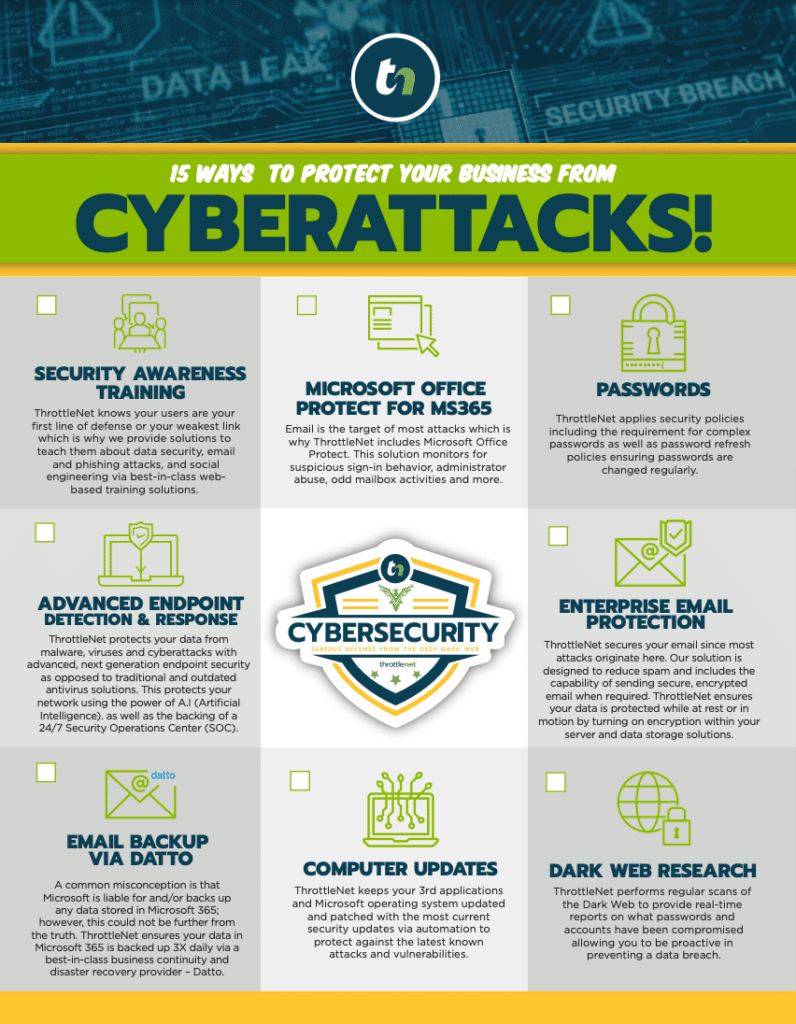
Implementing these strategies correctly requires specialized expertise. At ThrottleNet, our dedicated cybersecurity teams and 24/7 Security Operations Center (SOC) monitor these segmented environments around the clock. It’s the reason why ThrottleNet customers have never paid a ransomware attack, and it’s backed by our exclusive $500,000 Cybersecurity Protection Program.
The Local Advantage: Why Integration Requires Boots on the Ground
Integrating complex physical hardware with modern digital environments is not a job for a remote, overseas help desk. It requires a partner who can actually walk your warehouse floor, understand the physical layout of your network, and map your unique workflows.
Traditional Managed Service Providers (MSPs) often rely on small teams of “jack-of-all-trades” IT generalists. But bridging the IT/OT gap requires specialists.
This is where ThrottleNet’s unique multi-tiered help desk model changes the game for St. Louis businesses:
- Built for Speed: With a best-in-industry 90-second average response time and a 93% same-day resolution rate, issues are routed to the right level of engineering talent immediately—eliminating “level 1 bottlenecks” that cause factory downtime.
- Built for Strategy: Every client is paired with a Virtual Chief Information Officer (vCIO)—a dedicated IT strategist who understands both technology and business. Rather than acting as a standard account manager, your vCIO helps you build a long-term roadmap to modernize your legacy systems over time, predictably managing budgeting and risk.
- Specialist Teams: We don’t guess when it comes to your infrastructure. ThrottleNet utilizes dedicated specialist teams for cybersecurity, cloud services, and network engineering to ensure legacy integrations are done right the first time.
Frequently Asked Questions (FAQ)
What is legacy system integration vs. migration?
Integration is the process of connecting your existing older systems (hardware or software) to modern applications using translators like middleware, allowing them to share data. Migration involves moving your data and operations entirely off the old system and into a new one (like moving from an on-premise server to the cloud).
Why is my older system considered a security risk if it’s not connected to the internet?
Even if a legacy machine isn’t directly browsing the web, if it is connected to your internal company network, it is vulnerable. If an employee in the front office clicks a malicious email link, ransomware can spread through the internal network and infect the unprotected legacy machine.
How do we modernize without causing factory downtime?
By moving in phases. Rather than a total system overhaul, a dedicated vCIO will help you map out a strategy that stabilizes your current environment first. We then introduce middleware translators and network segmentation to securely extract data, modernizing the environment step-by-step alongside your production schedule.
What is middleware, and how does it translate data from old protocols?
Middleware is software that acts as a bridge between two applications that normally wouldn’t be able to communicate. It takes the data output from a legacy protocol, translates it into a modern format (like an API), and securely delivers it to your new cloud software, allowing both systems to function seamlessly.
Next Steps: Assessing Your Integration Readiness
Your legacy systems are a testament to the durability and success of your business. But the technology that got you here won’t necessarily get you to where you need to go tomorrow.
You don’t need to choose between ripping out millions of dollars of reliable infrastructure and leaving your business vulnerable to cyber threats. You simply need a strategic technology roadmap.
If you are dealing with aging hardware, data silos, or legacy software that is holding back your growth, the first step is gaining total visibility into your network. Connecting with a ThrottleNet vCIO for a comprehensive network and security assessment can help you define the true cost of your technical debt and chart a safe, predictable path toward modernization.