
Imagine it’s 11:30 PM on a Friday. A senior partner, exhausted from preparing for a massive merger, clicks a highly convincing link in an urgent email claiming a case file needs immediate review.
Who gets the security alert?
If your law firm relies solely on an internal IT director, that alert might sit in an inbox until Monday morning—giving a cybercriminal over 48 hours to encrypt your firm’s sensitive data. Your internal IT person is likely brilliant, deeply familiar with your firm’s culture, and excellent at keeping your attorneys productive. But they are human. They need to sleep, take vacations, and occasionally disconnect.
The legal sector is currently facing an unprecedented “bench-depth problem.” Law firms are realizing that their internal IT staff—while exceptional at managing legal software and onboarding new associates—cannot realistically provide a 24/7 Security Operations Center (SOC), conduct deep cybersecurity forensics, or manage rigorous compliance auditing alone.
The solution isn’t to replace your trusted internal IT team. The solution is to arm them with specialized support. Welcome to the world of Co-Managed IT.

The “Bench-Depth” Problem in Legal Technology
Think of your internal IT manager as a brilliant general practitioner. They know your firm inside and out. They hold the “tribal knowledge” of exactly how your managing partner likes their iPad configured, how to troubleshoot a stubborn iManage plugin, and how to keep billable hours flowing smoothly.
However, modern cybersecurity and compliance have evolved into highly specialized medical fields. You wouldn’t ask your general practitioner to perform complex neurosurgery. Similarly, you shouldn’t expect one IT generalist to simultaneously act as a Chief Information Security Officer (CISO), a cloud architecture engineer, and a 24/7 security analyst.
When internal teams are stretched too thin, two things happen:
- Burnout: Your IT staff spends their days putting out fires and their nights worrying about ransomware.
- Risk Exposure: The proactive, specialized work—like analyzing threat logs, testing disaster recovery backups, and mapping out compliance audits—gets pushed to the back burner.
What is Co-Managed IT for Law Firms?
Co-managed IT is a collaborative partnership. It provides your existing internal IT team with access to enterprise-grade tools, a multi-tiered help desk, and specialized engineering teams (like cybersecurity, cloud, and networking experts) to fill their skill and bandwidth gaps.
Myth vs. Reality
The Myth: “Hiring an outside IT firm means we are firing our internal IT guy.”The Reality: Co-managed IT is designed to protect your internal IT staff, not replace them. It removes the exhausting, behind-the-scenes monitoring and emergency after-hours troubleshooting from their plate, empowering them to focus on the technology that actually drives your firm’s revenue.
This introduces the 80/20 Rule of Legal IT: Your internal team should spend 80% of their time on legal operations, efficiency, attorney support, and technology adoption. Your co-managed partner should handle the 80% of backend security, compliance monitoring, and infrastructure maintenance.
The Law Firm IT Responsibility Matrix: Who Does What?
To understand how this partnership works in practice, it helps to look at a clear division of labor. Here is how a successful co-managed relationship typically splits responsibilities:
What Your Internal IT Team Handles:
- The Day-to-Day Relationship: Preserving the firm’s culture and providing familiar face-to-face support.
- Legal Tech Workflows: Managing practice management software (like Clio or MyCase) and document management systems (like NetDocuments).
- VIP Support: Hand-holding partners through complex trial technology preparations.
- User Training: Ensuring new associates know how to navigate the firm’s specific processes.
What the Co-Managed IT Partner Handles:
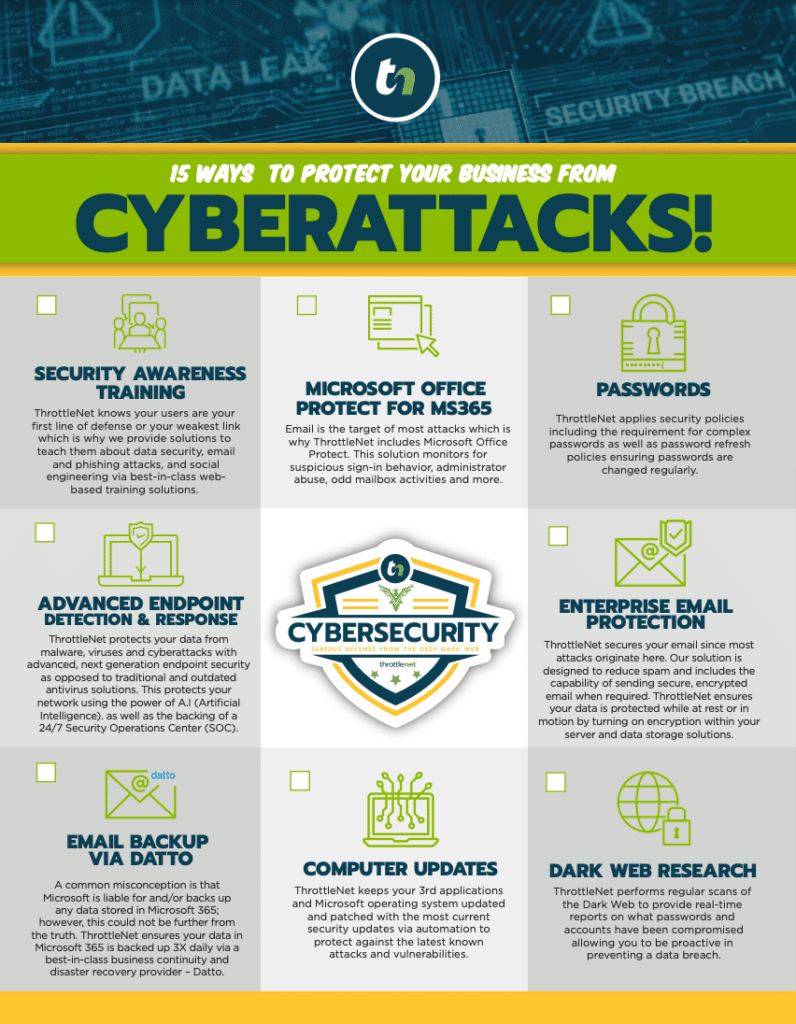
- 24/7/365 Security Operations Center (SOC): Persistent threat monitoring, so that 11:30 PM Friday phishing click is caught and quarantined in real-time.
- Specialized Engineering Support: Providing dedicated teams for complex cloud migrations (Azure, Microsoft 365) and network architecture.
- Rapid Multi-Tiered Help Desk: At ThrottleNet, our unique multi-tiered help desk ensures every request is routed to the right level of engineering talent immediately, resulting in an industry-leading 90-second average response time and a 93% same-day resolution rate.
- Immutable Backups & Disaster Recovery: Ensuring your firm’s data is verified daily and protected from ransomware encryption.
- Strategic Guidance: Pairing your firm with a dedicated Virtual Chief Information Officer (vCIO) to map out technology budgeting and compliance roadmaps.
Translating Technology into Legal Compliance
For law firms, IT isn’t just about keeping the Wi-Fi running; it’s an ethical obligation. Co-managed IT translates highly technical cybersecurity measures directly into Bar-compliant practices.
ABA Model Rule 1.1 (Competence)
Lawyers have a duty to maintain competence, which explicitly includes understanding the “benefits and risks associated with relevant technology.” You can’t achieve this if your sole IT person is too overwhelmed to implement modern safeguards. A co-managed partner brings a dedicated vCIO strategy team to continually educate your leadership on the changing tech landscape.
ABA Model Rule 1.6 (Confidentiality)
Law firms must make “reasonable efforts” to prevent the inadvertent or unauthorized disclosure of client information. Co-managed specialists map technical features directly to this rule:
- Zero Trust Architecture & Next-Gen Endpoint Security: Ensuring only verified users on safe devices access your network.
- Immutable Backups: Data backups that cannot be altered or deleted by hackers, ensuring client files are always recoverable.
The Cyber Liability Insurance Reality
Corporate clients and malpractice carriers are no longer taking your word for it when you say your firm is “secure.” They require a formalized evidence trail. Cyber liability insurance carriers demand Bar-compliant audit logs, Multi-Factor Authentication (MFA), and 24/7 monitoring.
A co-managed IT partner provides the infrastructure and reporting necessary to pass these audits with flying colors—often helping to lower your insurance premiums in the process. This rigorous approach works: it is exactly why ThrottleNet customers have never paid a ransomware attack, a fact we stand behind with an exclusive $500,000 Cybersecurity Protection Program.
The 90-Day Integration Plan: Adding “Special Forces” to Your Firm
If you are worried that bringing in outside help will disrupt your active caseloads, a well-structured co-managed provider utilizes a painless onboarding process. Here is what the first 90 days of adding specialized support to your firm looks like:
Month 1: Secure the Foundation
Your co-managed partner deploys proactive 24/7 network monitoring software and cybersecurity protection across your firm. We gather and document critical network details, secure passwords, and introduce your internal IT director to a streamlined command center—like the TN TechHub—giving them total visibility into the network’s health without having to do the manual monitoring themselves.
Month 2: Define the Handoff
This is where the magic happens. We establish clear ticketing workflows. If an associate forgets a password, who handles it? If a server goes offline at 2 AM, who gets the call? By defining these escalation matrices, your internal team gains immediate breathing room.
Month 3: Strategic Alignment
Instead of acting as a reactive “break-fix” vendor, your dedicated vCIO and internal IT director sit down to map out a custom, 1-to-3-year technology roadmap. Together, they align IT initiatives with the firm’s future growth, budget requirements, and compliance needs.
Frequently Asked Questions (FAQ) About Co-Managed IT in Legal
Will co-managed IT replace our current IT staff? No. Co-managed IT is designed to supplement and empower your existing staff by filling their skill gaps and providing them with specialized tools, cybersecurity teams, and after-hours coverage. Think of it as giving your internal IT director an entire department of experts to manage.
How does co-managed IT impact our cyber liability insurance? Positively. Because co-managed IT providers implement enterprise-grade security (like 24/7 SOC, next-gen endpoint protection, and verified backups), your firm can easily prove compliance with the strict security frameworks demanded by insurance carriers, which can help lower premiums and ensure claim payouts aren’t denied due to negligence.
What happens during an after-hours emergency? Instead of your internal IT manager waking up to a panicked phone call, the co-managed IT partner’s 24/7 monitoring detects the anomaly. A dedicated team of engineers immediately triages the issue, quarantines the threat, and resolves it—often before your attorneys even log on the next morning.
Is co-managed IT more expensive than hiring a full-time CISO? Hiring an internal Chief Information Security Officer (CISO), a cloud engineer, and a weekend help-desk tech would cost a firm hundreds of thousands of dollars annually. Co-managed IT provides access to all these specialists at a fraction of the cost of hiring additional full-time staff.
Next Steps for Your Firm
Your internal IT team is one of your firm’s greatest assets, but they shouldn’t have to face the evolving landscape of cyber threats, corporate compliance audits, and after-hours emergencies alone. By adopting a co-managed IT model, you retain the control and cultural familiarity of your internal staff while backing them with the specialized firepower of an award-winning IT organization.
Ready to see where your firm’s current IT infrastructure might be leaving you vulnerable? Exploring a basic or advanced risk assessment is the most effective way to identify hidden gaps, evaluate your cybersecurity posture, and discover exactly how a co-managed partnership can take your firm’s productivity and security to the next level.