
Not long ago, the IT systems at Bridgeton-based Hussmann Corp. were unexpectedly locked down in a cyberattack. For a major local manufacturer, the disruption was severe—operations halted, data was compromised, and the reality of modern cyber threats hit dangerously close to home.
It’s a nightmare scenario that forces a critical question: If their IT systems were locked down, what would happen if yours were?
Before 2020, securing your business was relatively straightforward. Your team worked in a central office, your servers were in a locked room, and a strong corporate firewall acted as a digital moat around your data.
Today, that moat is gone.
If you are like most St. Louis and Metro East businesses, your “office” is now a sprawling network of kitchen tables in St. Charles, coffee shops in Clayton, and home offices in Belleville. While remote and hybrid work has opened doors for talent and flexibility, it has also fundamentally changed the rules of IT security. In fact, industry research shows that 63% of businesses have experienced data breaches directly linked to remote work, and incidents involving insider threats—often accidental—have risen by 58%.
As a business leader, you don’t need a degree in computer science to protect your company. But you do need a new playbook. Let’s break down the realities of remote workforce security, eliminate the technical jargon, and build a practical plan to protect your team wherever they are.

The Anatomy of a Remote Work Breach
When national cybersecurity firms talk about remote risks, they often drop a laundry list of 18 or 20 obscure threats. For a small to mid-sized business owner, that is paralyzing. In reality, remote work vulnerabilities almost always boil down to three specific weak points:
1. The Insecure Connection
When an employee connects to your company data from a local coffee shop in The Grove, they are sharing a public Wi-Fi network with strangers. Even home Wi-Fi networks are notoriously vulnerable, often running on outdated hardware with default passwords. Without proper encryption, any data sent over these networks can be easily intercepted.
2. The Vulnerable Device
We’ve all seen it: an employee using their work laptop to let their kids play games, or worse, using their personal, unprotected home computer to access sensitive company files (a practice known as Bring Your Own Device, or BYOD). Unpatched devices lacking professional-grade security software act as open doors for malware and ransomware to slip into your broader business network.
3. The Untrained Person
There is a common misconception that “employees are the biggest threat” because they are malicious. The truth is, employees usually bypass security because the tools they are given are inefficient—leading to “Shadow IT” where they use unauthorized apps just to get their jobs done. Furthermore, remote workers are isolated. Without the ability to peek over a cubicle wall and ask, “Hey, did you just send me this invoice?”, they are highly susceptible to sophisticated phishing emails.
Mistake Callout: Using an “office-first” security policy for remote workers. Trying to apply traditional office security rules to a dispersed team usually results in frustration. If security protocols make it impossible for your team to do their jobs efficiently, they will find workarounds—and those workarounds will leave your business vulnerable.
The 5-Step St. Louis SMB Security Framework
Protecting a geographically dispersed workforce doesn’t mean implementing every shiny new cybersecurity tool on the market. It means layering foundational security practices that work together.
Here is a practical, prioritized framework for securing your St. Louis metro team:
Step 1: Create a Reality-Based Remote Security Policy
Before buying software, you need clear rules. A remote work policy shouldn’t be a 50-page manual; it should be a simple, enforceable document that dictates what devices can be used, what networks are approved, and how sensitive data should be handled. Checkpoint 1: Do you have a written remote work policy? If not, start here.
Step 2: Secure the Connection
If your employees are accessing internal company resources remotely, they need a Virtual Private Network (VPN). Think of a VPN as a secure, private tunnel cut through the public internet. Even if an employee is on an unsecured Wi-Fi network at St. Louis Lambert International Airport, a VPN scrambles their data so nobody else can read it.
Step 3: Lock Down All Devices
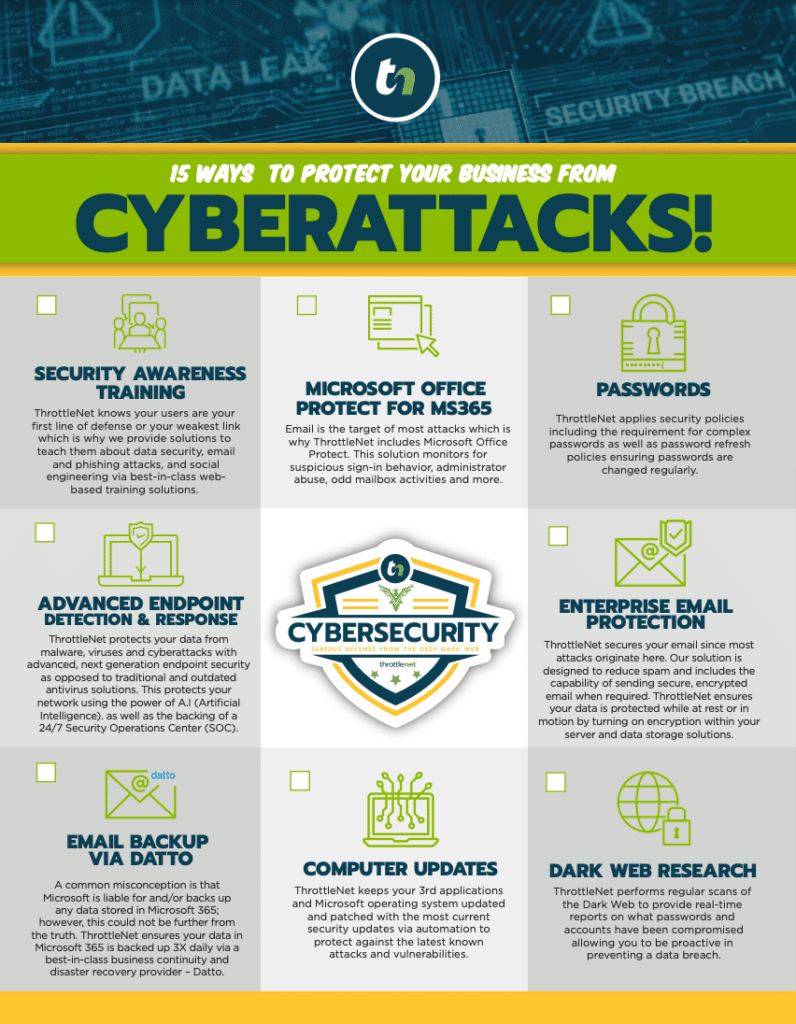
Traditional antivirus software is no longer enough. Modern remote teams require Next-Generation Endpoint Protection, which uses behavioral analysis to spot ransomware before it executes. Additionally, you must implement Multi-Factor Authentication (MFA). MFA requires a user to provide two or more verification factors to gain access—usually their password plus a code sent to their smartphone. It is the single most effective way to stop a hacker who has stolen an employee’s password.
Step 4: Train Your Team (The Human Firewall)
Cybercriminals know your employees are isolated at home. Regular, bite-sized security awareness training transforms your staff from your biggest liability into your first line of defense. Training should teach them how to spot phishing attacks, how to safely handle data, and exactly what to do if they suspect they’ve clicked a bad link.
Step 5: Establish Local IT Oversight
This is where many businesses stumble. They buy the right tools but lack the resources to manage them. Managing a remote workforce requires 24/7 monitoring and a support team that can respond immediately when things break.
When a remote employee gets locked out of their system, they can’t wait hours for a callback from a generic, national IT help desk. This is why having a local St. Louis partner makes a tangible difference. For example, ThrottleNet utilizes a unique multi-tiered help desk system staffed by dedicated specialists—not generalists. This structure ensures that issues are immediately escalated to the correct level of engineering talent. The result? A best-in-industry 90-second average response time and a 93% same-day resolution rate. Your team gets back to work faster, and your network stays secure.
Navigating Metro Area Complexities: The MO/IL Dynamic
Operating in the St. Louis region presents a unique geographical challenge: your workforce likely spans across state lines. If you have employees working from home in the Metro East (Illinois), your business is subject to different regulatory environments than if your entire team was in Missouri.
Illinois has some of the strictest data privacy and breach notification laws in the country, including the Biometric Information Privacy Act (BIPA). If an employee’s compromised home network in O’Fallon, IL, leads to a breach of client data, the legal and financial ramifications are dictated by Illinois law, which is notoriously stringent.
This cross-border dynamic means your cybersecurity strategy must be compliant with the strictest regulations your dispersed workforce falls under. A dedicated Virtual Chief Information Officer (vCIO)—a strategic IT leader who understands both technology and business compliance—can help you navigate these regional complexities without overburdening your operations.
Frequently Asked Questions (FAQ)
What is the most cost-effective security stack for a small, local business?
The most cost-effective approach isn’t buying the cheapest tools; it’s buying the right foundational layers. A solid baseline includes Next-Generation Endpoint Security, Multi-Factor Authentication (MFA), cloud-based email filtering (to stop phishing), and automated data backups. Working with a Managed Service Provider (MSP) allows you to bundle these enterprise-grade tools at a fraction of the cost of buying them individually.
How does “Zero Trust” work for a small business?
“Zero Trust” sounds like a buzzword, but it’s a simple concept: Never trust, always verify. Instead of assuming anyone inside your network is safe, Zero Trust requires every user and device to prove their identity before accessing any file or application. For a small business, this starts with implementing strict MFA and giving employees access only to the specific files they need to do their jobs (known as the Principle of Least Privilege).
Are remote workers more vulnerable to ransomware?
Yes, if they aren’t properly secured. Remote workers often lack enterprise-grade firewalls at home, making their individual devices easier targets. If a remote device gets infected with ransomware and connects back to the corporate network, the infection can spread. Notably, because of proactive 24/7 network monitoring and multi-layered security measures, ThrottleNet customers have never had to pay a ransomware attack.
Can we just use standard antivirus for remote workers?
No. Standard antivirus relies on recognizing known “signatures” of old viruses. Today’s cybercriminals create new, unique malware daily. You need advanced endpoint security that monitors the behavior of the computer. If a program suddenly tries to encrypt all your files, the endpoint security stops it immediately, even if it has never seen that specific virus before.
Next Steps for Securing Your Geographically Dispersed Team
The shift to remote and hybrid work isn’t a temporary trend; it is the new operational reality for St. Louis businesses. While the disappearance of the traditional office perimeter brings new challenges, it doesn’t mean you have to accept higher risks.
By implementing clear policies, securing connections, locking down devices, and training your team, you can confidently support a workforce that stretches from Wentzville to Edwardsville.
However, you don’t have to navigate this landscape alone. Technology should make your business more efficient, not keep you awake at night worrying about cyber extortion or compliance fines. ThrottleNet is passionate about turning IT frustration into joy by taking turnkey responsibility for your technology. With award-winning support, an exclusive $500,000 Cybersecurity Protection Program, and an open-book management philosophy that incentivizes our team to go above and beyond, we ensure your network remains safe while your people remain productive.
Ready to see exactly where your remote workforce might be vulnerable? Start by seeking a comprehensive, locally-guided IT and security assessment to map your current risks and build a strategic roadmap for the future.