
Imagine a local family support network right here in Washington, MO. The staff and volunteers are deeply committed, working tirelessly to unlock resources and provide care for vulnerable families in the community. But behind the scenes, there is a hidden bottleneck: computers that take fifteen minutes to boot up, a shared spreadsheet that constantly crashes, and an unpredictable Wi-Fi network that drops during critical grant application uploads.
While the mission is powerful, the technology is actively working against it.
This is the technology-mission disconnect. Many nonprofit directors and board members fall into the trap of viewing technology as a necessary evil—a line item to be minimized. But in reality, unoptimized technology creates research bottlenecks, delays critical community support, and leaves sensitive donor data exposed.
If you are leading a nonprofit in the Midwest, understanding how to transition your technology from a frustrating expense to a predictable “mission multiplier” is one of the most impactful strategic shifts you can make.
The “Lean Budget” Paradox: Why Saving on IT is Costing You
In the nonprofit sector, there is a pervasive concept known as the “overhead myth”—the misconception that keeping operational costs (like IT) as close to zero as possible is the ultimate badge of honor. Because of this, organizations often try to “make do” with aging, seven-year-old servers or rely on a tech-savvy volunteer to fix issues when they inevitably break.
But this lean budget paradox actually costs your organization more in the long run.
Think about the true cost of downtime. If your network goes down for four hours, that isn’t just a technical glitch. It represents dozens of lost volunteer hours, delayed services for the families who rely on you, and potential compliance violations.
Holding onto legacy systems is an emergency waiting to happen. Modern, cloud-based environments and outsourced managed IT services transition your organization away from expensive “break-fix” emergencies. Instead of crossing your fingers and hoping a server doesn’t crash, managed services provide proactive maintenance that stops downtime before it happens.
Securing the “Token of Support”: Why Hackers Target Nonprofits
It is a common assumption that cybercriminals only target massive corporations or financial institutions. The dangerous reality is that hackers frequently target nonprofits precisely because they know budgets are lean and security training is often minimal.
Your organization holds something incredibly valuable: rich donor databases, financial records, and highly sensitive, personally identifiable information (PII) of the vulnerable populations you serve.
A data breach in the nonprofit sector isn’t just a technical inconvenience. It destroys the “token of support” and the goodwill you have spent years building in your community. If donors cannot trust you with their financial data, they will redirect their support elsewhere.
The Human Element of Cyber Threats
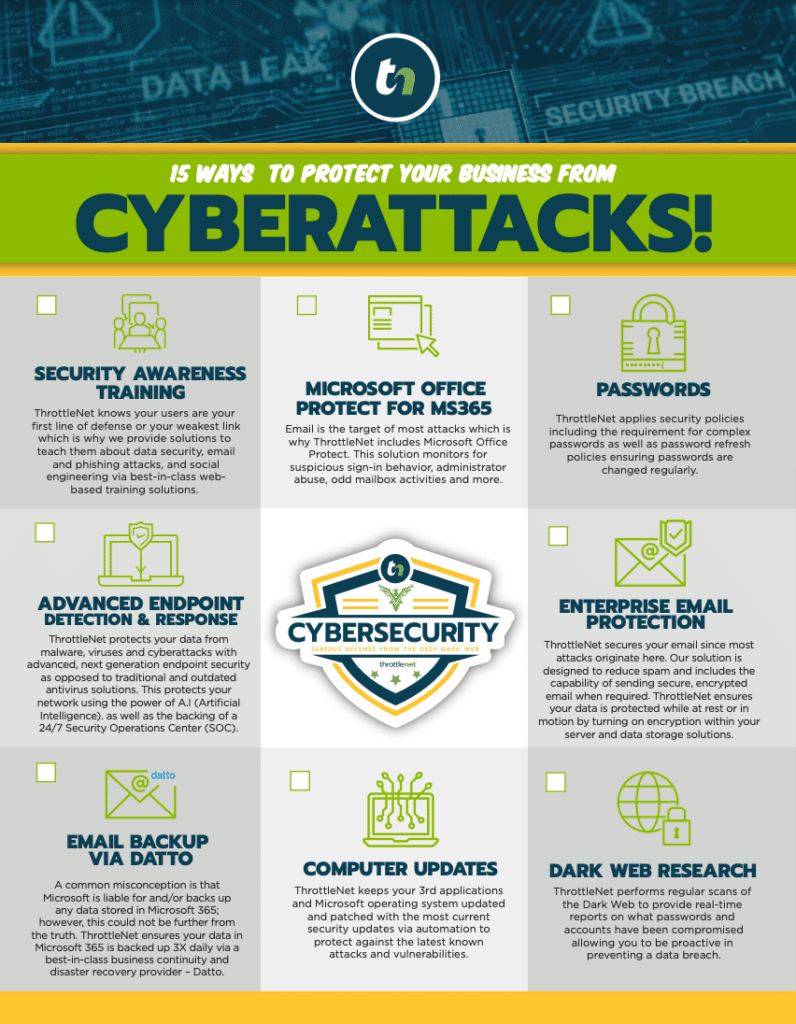
The vast majority of cyberattacks against nonprofits don’t look like sophisticated movie hacks; they look like an urgent email from your “Executive Director” asking a volunteer to purchase gift cards. This is known as phishing, and it preys on the natural human desire to be helpful.
To combat this, cybersecurity professionals often refer to the “1-10-60 rule”—the goal of detecting a threat in 1 minute, investigating it in 10 minutes, and remediating it within 60 minutes. While that metric highlights the need for speed, the best defense stops the clock from starting at all.
This is why comprehensive end-user training is non-negotiable. By partnering with a provider like ThrottleNet, your staff and high-turnover volunteers receive ongoing, jargon-free training to spot phishing emails and credential stuffing attempts. Coupled with next-generation endpoint security and multi-factor authentication (MFA), this human firewall becomes your strongest line of defense.
Structuring IT for Predictability and Growth
Just as your organization relies on the stability of predictable, monthly recurring donations, your operational budget requires predictable IT costs.
Many nonprofits maintain a “contingency fund” for emergency IT repairs, constantly worrying that a single blown server will force them to pull funds away from core programs. By shifting to an all-inclusive managed IT service model, you eliminate budget volatility.
ThrottleNet’s flat-fee pricing model gives nonprofits enterprise-level tools—like a 24/7 Security Operations Center (SOC) and proactive network monitoring—without the enterprise price tag. Furthermore, ThrottleNet operates on flexible, month-to-month agreements, meaning they have to earn your business every single day through performance, not binding paperwork.
Grant Acquisition and IT Stability
There is a direct, often overlooked link between predictable IT and grant acquisition. Modern funders and grant committees want to see secure, stable organizations. When you can demonstrate to a foundation that your data is protected by a $500,000 cybersecurity protection program and guided by a dedicated Virtual Chief Information Officer (vCIO), you instantly elevate your organization’s credibility.
The Executive Director’s Toolkit: Pitching IT to Your Board
Board members are fiduciaries; they want to ensure every dollar is stewarded wisely. When pitching an investment in managed IT services, you must translate technical jargon into risk mitigation and ROI.
Here is a simple framework to guide your next board conversation:
- Focus on Uptime, Not Hardware: Don’t talk about routers or firewalls. Explain that ThrottleNet’s unique multi-tiered help desk delivers a 90-second average response time and resolves 93% of issues the same day. This means staff members spend their time advancing the mission, not wrestling with frozen computers.
- Highlight the Security Threat: Present the reality of targeted phishing campaigns. Frame cybersecurity as a required insurance policy to protect donor trust and community reputation.
- Show Budget Predictability: Explain how an all-inclusive flat fee replaces unpredictable emergency repair bills, allowing the board to accurately forecast annual spending without holding massive contingency reserves.
- Leverage Dedicated Strategy: Emphasize that you aren’t just hiring a tech support hotline; you are gaining a 7-person vCIO strategy group that will build a long-term technology roadmap tailored to your specific organizational goals.
Frequently Asked Questions (FAQ)
Why does IT seem so expensive for nonprofits?
IT feels expensive when it is treated reactively. When you only pay for IT when things break, you are paying emergency rates, plus the hidden costs of lost productivity. Managed IT services flip this model, offering proactive maintenance for a predictable monthly fee, which is historically much more cost-effective.
How do we budget for IT without taking away from program funds?
Technology should be viewed as a capacity-building tool that supports program funds. Optimized IT automates administrative tasks, accelerates grant applications, and keeps remote volunteers connected. By moving to a predictable flat-fee model, you can accurately budget your IT spend annually, eliminating the surprise expenses that drain program reserves.
When should a nonprofit outsource IT to a Managed Service Provider (MSP)?
You should consider an MSP when IT issues start causing operational bottlenecks. If your staff spends hours troubleshooting tech issues, if you lack a documented disaster recovery plan, or if your organization is growing beyond the capacity of an “accidental IT volunteer,” it is time to bring in specialist teams.
How do we implement cybersecurity across a high-turnover volunteer network?
Volunteers are the lifeblood of nonprofits, but high turnover makes managing passwords a nightmare. Solutions involve deploying nonprofit-friendly password managers (like Password Boss) paired with centralized access controls. ThrottleNet helps manage onboarding and offboarding securely, ensuring departing volunteers immediately lose access to sensitive systems, while providing incoming volunteers with streamlined end-user security training.
Next Steps: Empowering Your Mission Through Better Technology
Your nonprofit’s mission in Washington, MO is too important to be derailed by slow Wi-Fi, preventable cyberattacks, or unpredictable repair bills. Technology should be the silent engine that drives your impact forward, not an anchor holding you back.
If you are ready to move away from the “overhead myth” and build an IT environment that protects your donor trust while maximizing your lean budget, it begins with understanding where you currently stand. Take the first step by assessing your current network health and security posture. By aligning your technology strategy with your organizational goals, you can ensure that every hour of your team’s day is spent exactly where it belongs: serving your community.