
For financial advisors and firm principals in St. Louis, the day often starts before the opening bell. You’re managing client portfolios, navigating market volatility, and building relationships based on trust. But lurking behind every trade and email is a silent, complex ecosystem of federal regulations that—if ignored—can dismantle that trust in seconds.
For many St. Louis-based Registered Investment Advisors (RIAs) and broker-dealers, “compliance” often feels like a burden reserved for the legal department. However, in today’s digital-first economy, compliance is actually an IT problem.
Whether it’s SEC Rule 17a-4 or FINRA Rule 4370, the government isn’t just asking if you are honest; they are asking if your technology is resilient, secure, and auditable.
This guide explores the intersection of financial regulation and information technology, helping you understand how to turn compliance from a terrifying checklist into a competitive advantage.

The St. Louis Imperative: Why Local Context Matters
It is a common misconception that regulatory compliance is a “one-size-fits-all” cloud that hovers over the entire country equally. While the laws are federal, the operational reality is local.
St. Louis financial firms face specific challenges that national competitors might not:
- Talent Constraints: Finding internal IT staff who understand both cybersecurity and the nuances of the Investment Advisers Act of 1940 is incredibly difficult.
- Infrastructure Risks: Local weather events and power grid fluctuations make Business Continuity Planning (BCP) more than just a theoretical paperwork exercise.
- Targeted Threats: As a mid-sized hub, St. Louis firms are often viewed by cybercriminals as “soft targets”—wealthy enough to pay a ransom, but potentially less protected than Wall Street giants.
Understanding your IT landscape isn’t just about keeping the computers running; it’s about proving to regulators (and your clients) that their data is safe right here in the Gateway City.
Decoding the Alphabet Soup: FINRA, SEC, and Your IT Stack
If you ask a generalist IT support provider about “17a-4,” you might get a blank stare. But for financial services, your IT partner needs to speak the language of regulation fluently. Let’s break down the three distinct IT pillars required by regulators.
1. Data Immutability (SEC Rule 17a-4)
The Concept: The SEC requires that electronic records be preserved exclusively in a non-rewriteable, non-erasable format. This is often referred to as WORM (Write Once, Read Many).The IT Reality: You cannot simply save files to a standard Dropbox folder or a basic hard drive. Your IT provider must configure storage solutions that physically prevent files from being altered or deleted before the retention period expires. Think of it as a digital version of a permanent ink document—once it’s filed, it cannot be white-outed.
2. Business Continuity (FINRA Rule 4370)
The Concept: FINRA requires firms to have a plan to stay in business and meet obligations to customers in the event of an emergency.The IT Reality: This goes beyond simple data backup. It requires “disaster recovery.” If your Clayton office loses power or suffers a server failure, how fast can you be back online?
- The Metric That Matters: It’s not just about having the data; it’s about Recovery Time Objective (RTO). Specialized IT support ensures your data is mirrored in the cloud, allowing you to access client files from a secure remote location immediately.
3. Cybersecurity and Consumer Protection (Reg S-P)
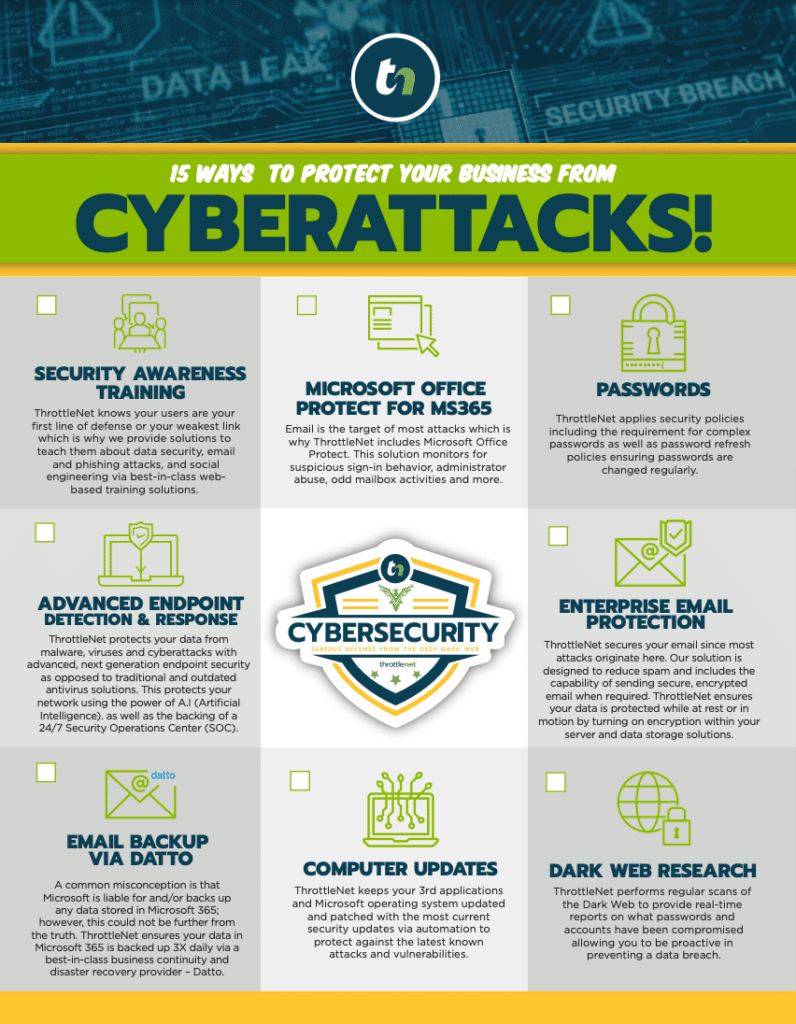
The Concept: Firms must adopt written policies and procedures that address administrative, technical, and physical safeguards for the protection of customer records and information.The IT Reality: This is where the rubber meets the road. It involves encryption, multi-factor authentication (MFA), and active threat hunting. It means your firewall needs to be managed 24/7, not just installed and forgotten.
Three Dangerous Myths About Financial IT Compliance
In our work with St. Louis firms, we often encounter misconceptions that leave businesses exposed to massive fines. Let’s debunk the top three.
Myth #1: “The Cloud Isn’t FINRA Compliant.”
The Truth: The cloud is actually more compliant than an on-premise server, provided it is configured correctly. Microsoft 365 and Azure, for example, have specific compliance centers that can be tailored to meet SEC retention requirements. The danger isn’t the cloud; it’s an unconfigured cloud environment that lacks audit trails.
Myth #2: “My Internal IT Guy Handles Compliance.”
The Truth: An internal IT manager is often a “jack-of-all-trades.” They fix printers, reset passwords, and manage software. However, compliance requires a specialist. A single person rarely has the bandwidth to monitor a 24/7 Security Operations Center (SOC) while also handling help-desk tickets. This is why Co-Managed IT is popular in the financial sector—it allows your internal staff to focus on daily ops while a specialized partner handles the heavy lifting of compliance and security.
Myth #3: “Text Messages Don’t Count.”
The Truth: This is the costliest myth of the last decade. Regulators have levied hundreds of millions of dollars in fines against firms for “off-channel communications.” If your advisors are texting clients on personal devices without capture software, you are non-compliant. A proper IT strategy includes Mobile Device Management (MDM) that secures devices and archives communications without infringing on personal privacy.
The NIST Connection: Moving From “Checklist” to “Fortress”
Many firms view compliance as a ceiling—the highest standard they need to reach. At ThrottleNet, we view compliance as the floor.
To truly protect a financial firm, we align IT strategy with the NIST (National Institute of Standards and Technology) framework. This is the gold standard for cybersecurity. By building your network architecture around NIST standards, you naturally satisfy FINRA and SEC requirements as a byproduct of being secure.
This approach transforms your IT from a cost center into a strategic asset. Instead of scrambling to prepare for an audit, your systems are “audit-ready” every single day because they are monitored 24/7 by a dedicated security team.
The “Sleep at Night” Factor: Why Guarantees Matter
In the financial world, risk management is everything. You hedge positions to protect capital. Your IT partner should do the same for your technology.
Standard Managed Service Providers (MSPs) often operate on a “best effort” basis. But when client wealth is on the line, “best effort” isn’t enough. You need validated results.
This is why looking for tangible commitment matters. For example, ThrottleNet offers a $500,000 Cybersecurity Protection Program. This isn’t an insurance policy you buy; it’s a guarantee we provide. It states that if we design your security and you still suffer a ransomware attack or data breach, we back our work financially.
Combined with a 90-second average response time on all customer chat requests and 93% same-day resolution rate on all issues, this creates an environment where technology supports your speed of business rather than slowing it down.
Frequently Asked Questions
What is the difference between a vCIO and an Account Manager?
An account manager sells you products. A vCIO (Virtual Chief Information Officer) is a strategic partner who understands your P&L, your compliance requirements, and your 3-year growth plan. For financial firms, a vCIO helps budget for compliance upgrades and creates the technology roadmap required for long-term stability.
Does Co-Managed IT replace my current IT staff?
No. Co-Managed IT is designed to empower your current staff. It gives them access to enterprise-grade tools, a 24/7 security team, and a deep bench of specialists, preventing burnout and allowing them to focus on high-value internal projects.
How often should we conduct a vulnerability scan?
For financial services, vulnerability scanning should be continuous, not annual. Threat actors don’t wait for your yearly audit. Your IT partner should be monitoring the “Dark Web” and your network perimeter 24/7/365.
Next Steps for St. Louis Financial Leaders
Compliance is complex, but it doesn’t have to be chaotic. The goal is to move your firm from a reactive state—worrying about the next audit—to a proactive state where your technology is a fortress of data integrity.
If you are unsure where your firm stands regarding SEC Rule 17a-4 or FINRA cybersecurity guidelines, the first step is education and assessment. You don’t need to commit to a new provider to understand your risks; you just need a clear view of your current landscape.
Ready to see how your security measures up against NIST standards? Explore what a dedicated, compliance-focused IT partnership looks like.