
Walk through the Cortex Innovation District on any given Tuesday, and you can feel the energy. Between the biotech labs, fintech disruptors, and agtech pioneers, St. Louis has built a world-class ecosystem for innovation. But beneath the surface of seed rounds and product launches lies a hidden challenge that catches many brilliant founders off guard.
We call it the Cortex Paradox: Is your technology foundation built to scale, or will it crumble under the weight of your first major success?
In the early days, you’re moving fast. Your “IT infrastructure” probably consists of a few personal laptops, a shared Google Drive, and an unspoken hope that nobody clicks on a phishing link. But as you hire your tenth employee, secure your Seed funding, and prepare for Series A due diligence, that consumer-grade tech stack transforms from a scrappy advantage into a massive liability.
Let’s unpack what it actually takes to build a secure, scalable IT foundation for a high-growth startup in St. Louis—and how to stop treating IT as a cost center, and start using it as a growth enabler.
The Cortex Paradox: Will Your Tech Stack Survive Your Success?
Many startups fall into the “Too Small to Target” myth. It’s easy to assume that because you aren’t a Fortune 500 company, cybercriminals won’t bother with you.
The reality is starkly different. Startups are prime targets precisely because they often handle highly valuable intellectual property (like biotech research or proprietary algorithms) but lack the enterprise-grade security of larger corporations. Hackers don’t need to steal millions in cash; deploying ransomware that halts your operations and threatens to leak your IP is often enough to devastate a growing company.
Transitioning from ad-hoc tools to a professional, secure IT stack isn’t just about preventing downtime. It’s about building a defensible company. When St. Louis-based venture capitalists look at your business, they are evaluating risk. A disorganized IT environment or a lack of compliance framework (like SOC 2 or HIPAA) can stall—or completely kill—a funding round.
The Startup IT Trinity: Your Foundation for Growth
To navigate rapid growth without technical debt, founders need to focus on three core pillars. Think of this as the foundation of a skyscraper. You wouldn’t build a 40-story building on the foundation of a garden shed, and you shouldn’t build a multi-million-dollar startup on personal email accounts.
1. Scalable Infrastructure
Scalability means moving from consumer-grade tools to a unified system that grows seamlessly as you add headcount. This involves standardized onboarding and offboarding, centralized device management, and secure cloud environments (like Microsoft 365 or Azure). When you hire a new developer, they should have their laptop securely configured, properly permitted, and fully operational on day one—not day four.
2. Proactive Cybersecurity
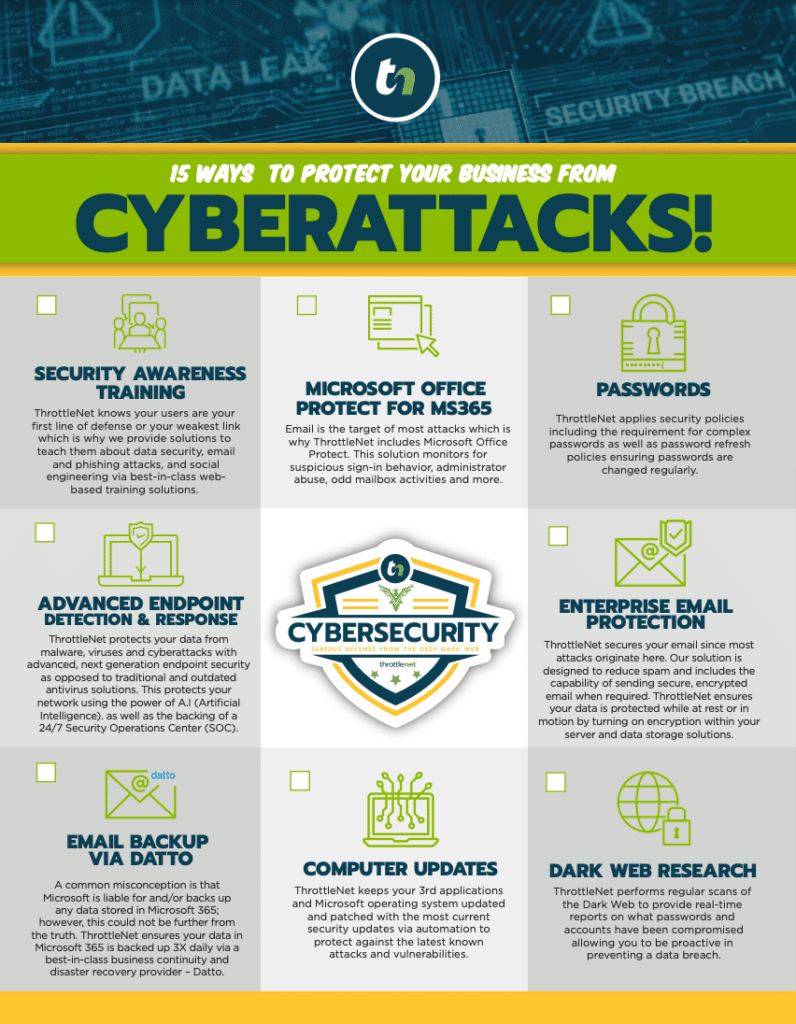
Cybersecurity can no longer be an afterthought or an optional add-on. It must be embedded into your culture from Day 1. This means moving beyond basic antivirus to next-generation endpoint security, 24/7 Security Operations Center (SOC) monitoring, and advanced email protection to stop business email compromise (BEC). Some of the top IT providers in the Midwest even back their security with robust financial guarantees—like a $500,000 cybersecurity protection program—because they know how critical threat mitigation is to business continuity.
3. Strategic Guidance (The Role of the vCIO)
Here is an “aha” moment for many founders: You don’t just need a help desk; you need a Virtual Chief Information Officer (vCIO). While traditional Managed Service Providers (MSPs) might offer you an “account manager” who simply sells you hardware, a vCIO is a dedicated strategist. They sit on your side of the table to help with long-term planning, cybersecurity risk management, budgeting, and aligning your technology initiatives with your company’s growth milestones.
The Cortex Startup IT Roadmap: From Pre-Seed to Series A
Your IT needs will shift dramatically as you hit different funding milestones. Here is a blueprint for your first two years in Cortex.
Pre-Seed & Bootstrapped: Securing the Basics
The Focus: Cost-effective solutions, secure collaboration, and basic endpoint management.The Pitfall: Using personal email addresses for company business. It looks unprofessional to investors and makes securing your data impossible when an early team member leaves.The Action: Set up a professional, business-grade tenant (Google Workspace or Microsoft 365). Implement Multi-Factor Authentication (MFA) across the board.
Seed Funded: Preparing for the Spotlight
The Focus: Building a scalable network, vendor management, and data governance.The Pitfall: Relying on a single “IT guy” or a generalist team. As you grow, you need dedicated specialists for cloud, security, and networking.The Action: Partner with a Managed IT Services provider that utilizes a multi-tiered help desk. You want a team where Tier 1 handles rapid fixes, while Tier 3 engineers manage complex infrastructure. This is how the best local providers achieve a 90-second average response time and resolve 93% of issues on the same day.
Series A & Beyond: Compliance and Advanced Security
The Focus: Strict compliance (SOC 2, HIPAA, NIST), advanced cybersecurity, and strategic IT budgeting.The Pitfall: Failing tech due diligence. Institutional investors will scrutinize your data security policies, incident response plans, and backup verifications.The Action: Lean heavily on your vCIO to map out a custom technology roadmap. Implement persistent threat monitoring, dark web monitoring, and automated patch management. Your IT should now be a well-oiled machine that proves to investors your house is in order.
The St. Louis Advantage: Why Local Context Matters for IT Support
When choosing an IT partner, Cortex founders often debate between large, faceless national brands and local providers. But there is a distinct advantage to hyper-local expertise.
A St. Louis-based partner understands the specific challenges of the local ecosystem. They know the compliance expectations of Midwest healthcare systems, the pace of the local manufacturing sector, and the rigorous due diligence standards of St. Louis venture capital firms.
Furthermore, high-growth startups burn cash quickly when their teams can’t work. You can’t afford to submit a support ticket to a national call center and wait 24 hours for a response. By partnering with a top-rated local provider—specifically one named the #1 IT Firm in St. Louis by St. Louis Small Business Monthly for over a decade—you gain access to rapid, 90-second response times and specialist engineering teams right in your backyard.
Whether you are networking at CIC or presenting at TechSTL, having a local tech partner means your IT support acts as an extension of your own team, fully invested in the St. Louis business community’s success.
Frequently Asked Questions (FAQ)
What exactly is a vCIO, and why does my startup need one?
A vCIO (Virtual Chief Information Officer) is a dedicated IT strategist who understands both technology and business. Unlike an IT technician who fixes broken printers, a vCIO helps you build technology roadmaps, manage IT budgets, prepare for investor due diligence, and ensure your tech stack scales with your headcount. They give you executive-level guidance without the six-figure salary of a full-time CIO.
How much should a St. Louis startup budget for IT support?
IT budgeting varies by headcount and industry (e.g., healthcare startups require more rigorous HIPAA compliance tools). However, modern Managed IT Services operate on a predictable, flat-rate monthly model. This all-inclusive approach covers 24/7 monitoring, multi-tier help desk support, and embedded cybersecurity, eliminating the unpredictable spikes of the outdated “break-fix” model.
When should we transition from consumer-grade tools to enterprise infrastructure?
The best time is right after your initial funding round, before you begin scaling your team aggressively. It is exponentially harder (and more expensive) to migrate data, establish security protocols, and enforce compliance when you have 30 employees compared to when you have 5.
Aren’t we too small for hackers to care about us?
No. Cybercriminals use automated bots to scan the internet for vulnerabilities, regardless of company size. Furthermore, startups are highly targeted because they often possess valuable intellectual property and investor capital, but lack the enterprise-level security barriers of larger corporations. You aren’t just protecting data; you are protecting your valuation.
Next Steps: Assessing Your IT Readiness
Building a startup in the Cortex Innovation District is an incredible opportunity, but it requires a foundation built on speed, accuracy, and security. If your internal IT team is stretched thin juggling daily support and complex cybersecurity, or if you’ve simply outgrown your current break-fix provider, it’s time to evaluate your tech stack.
The first step toward scaling safely is understanding where your vulnerabilities lie. Start by looking for an IT partner that offers a comprehensive risk assessment. By mapping out your network diagram, evaluating your cybersecurity posture, and sitting down with a vCIO, you can transform your IT from a source of frustration into your ultimate competitive advantage.