
Why do industrial companies in St. Louis use co-managed services in construction? Imagine the mobilization phase for a multi-million-dollar commercial build has just begun, but the project manager in the temporary jobsite trailer can’t access the latest blueprints on Procore. The consumer-grade internet router they picked up at a big-box store has failed, and the field crews are currently standing idle in the mud, waiting for direction.
Meanwhile, back at the main office, your sole internal IT director is up to their neck. They are trying to onboard three new estimators, untangle a complex Sage ERP integration, and investigate a suspicious email that looks suspiciously like a wire fraud attempt.
Your IT team isn’t failing. But they are drowning.
In the construction industry, a backed-up IT queue directly translates to idle time on the jobsite. As construction firms scale, taking on more projects and deploying more technology into the field, internal IT departments are often stretched to their breaking point.
This is where the concept of Co-Managed IT comes in, not to replace your internal IT heroes, but to give them the specialized backup they need to keep your firm building.

The Construction IT Bottleneck: Why Capable Teams Get Overwhelmed
The educational landscape around business technology often misses the brutal, muddy reality of a construction jobsite. Most tech advice assumes everyone is sitting in a temperature-controlled office on a stable fiber-optic connection.
But construction IT is different. It involves complex software stacks, a highly mobile workforce, and temporary networks that need to be stood up and torn down rapidly.
One of the most common traps growing firms fall into is the “DIY Connectivity Fallacy.” To save time, superintendents might try to set up their own consumer-grade Wi-Fi or simple access points on a jobsite. But these systems lack enterprise-grade failover (like cellular LTE, 5G, or Starlink integrations) and robust security protocols. When these fragile networks drop, the internal IT team is forced to drop everything and play firefighter.
When your IT director is spending 70% of their week resetting passwords, troubleshooting iPad connectivity in the field, and managing software licenses, they have zero time left for high-level technology strategy.
Defining Co-Managed Services in Construction: The “General Contractor” Approach to Technology
The biggest misconception about partnering with an IT firm is the fear of replacement. When business leaders start searching for solutions, internal IT teams often worry for their jobs. Let’s clear the air immediately: Co-managed services in construction is a strategic partnership framework designed to augment your internal staff, not replace them.
Think of your internal IT leader as a General Contractor (GC). They understand your business intimately. They know how your estimators work, they understand your billing cycles, and they hold the vision for your operational workflows.
However, a GC doesn’t pour the foundation, frame the walls, and wire the electricity all by themselves. They bring in specialized sub-contractors.
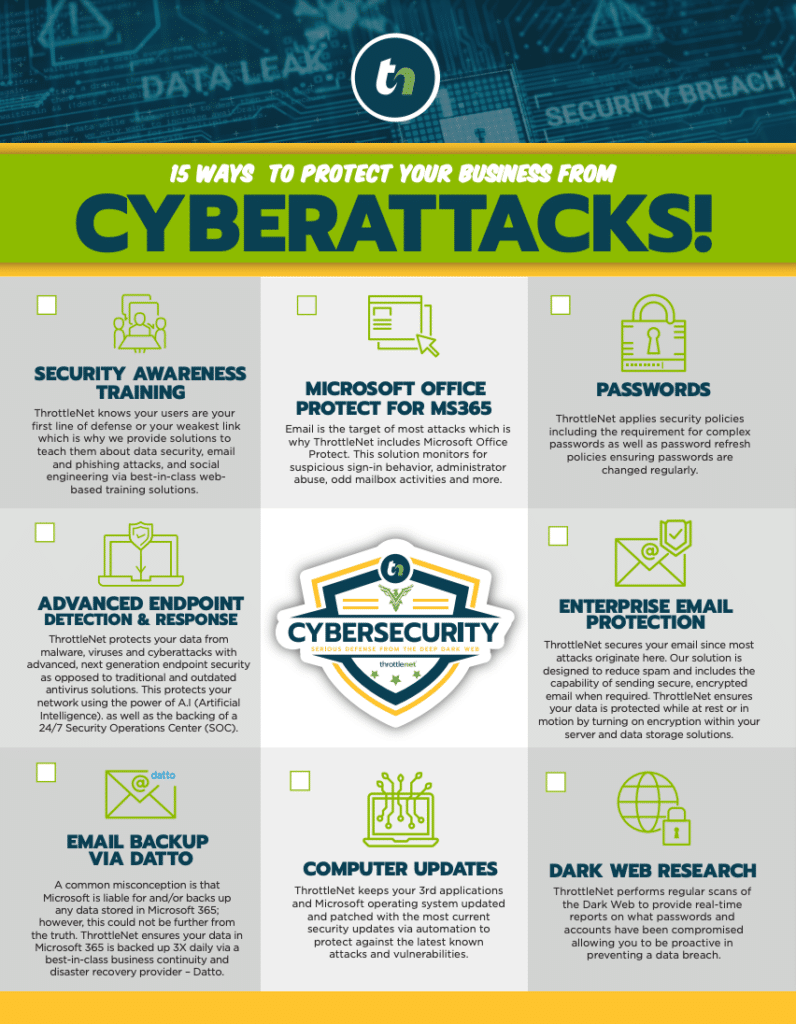
ThrottleNet’s Co-Managed IT services act as your specialized IT sub-contractors. We provide the heavy lifting, like a 24/7 Security Operations Center (SOC) and a multi-tiered help desk—so your “GC” can focus on managing the overarching technology strategy that drives your business forward.
Solving the Big 3 Construction IT Challenges
When you combine the institutional knowledge of your in-house team with the scalable capacity of ThrottleNet, you can systematically eliminate the three biggest technology bottlenecks in co-managed services in construction.
1. The Jobsite Lifecycle and Reliable Connectivity
IT should be treated as a distinct phase of the construction lifecycle: Pre-construction setup, Active jobsite support, and Project closeout.
In a co-managed services in construction environment, ThrottleNet handles the rapid turn-up of temporary trailer networks. We deploy ruggedized access points, secure VPNs linking back to headquarters, and cellular failovers. If the primary internet drops at a remote site at 6:00 AM, our monitoring systems detect it instantly, often failing over to a backup connection before the project manager even realizes there was an issue. When the project is over, we handle the secure teardown and data offboarding, keeping your internal team focused on the next big bid.
2. Software & Field Support to Keep Crews Moving
Field workers don’t have time to wait 24 hours for a support ticket to be answered. When someone is locked out of Autodesk, CMiC, or Procore, construction halts.
ThrottleNet utilizes a unique multi-tier help desk built for speed and accuracy. Instead of your internal IT person managing a massive queue of basic requests, ThrottleNet’s Tier 1 and Tier 2 support engineers take on the day-to-day triage. With an industry-leading 90-second average response time and a 93% same-day resolution rate, field workers get back to building almost immediately.
3. Securing the Field: Construction-Specific Cybersecurity
Construction firms move massive amounts of money, making them prime targets for business email compromise (BEC) and invoice fraud. Furthermore, field workers constantly access sensitive blueprints and proprietary data on mobile devices.
Protecting this data requires specialized security expertise that is incredibly expensive to hire in-house. A co-managed services in construction partnership grants your internal team instant access to enterprise-grade cybersecurity. ThrottleNet embeds next-generation endpoint security, 24/7 dark web monitoring, and persistent threat detection into your operations. We even back our proactive protection with a one-of-a-kind $500,000 Cybersecurity Protection Program to cover ransomware, business interruption, and data compromise.
The Co-Managed Services in Construction IT Responsibility Matrix
To truly understand how this co-managed services in construction partnership works seamlessly, it helps to physically map out the division of labor. Here is what a successful Co-Managed IT matrix looks like for a growing construction firm:
What Your Internal IT Team Owns:
- Workflow Strategy: Designing how technology can improve field-to-office communication.
- ERP & Core Software Integration: Customizing platforms like Sage or Viewpoint for your specific accounting needs.
- Employee Training & Adoption: Ensuring project managers are utilizing company software correctly.
- High-Level Decision Making: Collaborating with executive leadership on company growth.
What ThrottleNet Owns:
- 24/7 Network Monitoring: Watching over jobsite connectivity and HQ infrastructure.
- Tier 1 & 2 Help Desk Support: Handling password resets, hardware failures, and day-to-day troubleshooting instantly.
- Cybersecurity & Compliance: Managing the 24/7 Security Operations Center (SOC), malware protection, and backup verification.
- Patch Management: Silently updating software and servers after hours to prevent downtime.
- Centralized IT Intelligence: Providing the TN TechHub, an intuitive all-in-one portal where your internal team can monitor real-time IT performance, track support tickets, and view software inventory in one place.
Assessing Your Firm’s IT Maturity
How do you know if it’s time to hire another internal tech or partner with a co-managed services in construction MSP? Ask yourself these questions:
- Is our internal IT team spending more time fixing broken things than implementing new solutions?
- If our IT director takes a two-week vacation, does our technology support grind to a halt?
- Are we relying on consumer-grade technology on active jobsites because we lack the bandwidth to deploy enterprise solutions?
- Do we have a dedicated cybersecurity expert actively monitoring our network for invoice fraud and ransomware?
If you answered “yes” to the first three and “no” to the last, your internal team is likely operating at maximum capacity. Adding another generalist to your payroll won’t solve the problem; adding a specialized, multi-tiered support structure will.
Frequently Asked Questions (FAQ)
What is the exact handover process between our internal team and ThrottleNet?
Through our fast and painless 30-day client onboarding process, we map out clear escalation paths. Your employees can request support via desktop chat or the TN TechHub. Routine tickets go straight to our multi-tiered help desk for 90-second resolution. If a ticket requires intimate knowledge of your specific business processes, our engineers seamlessly escalate it to your internal IT team.
Will we lose control of our network?
Absolutely not. ThrottleNet operates on principles of transparency and open-book management. You retain full administrative control and ownership of your data, licenses, and hardware. We act as your trusted co-pilots, not your replacements.
How does a co-managed services in construction partner help with long-term technology planning?
We don’t just provide help desk support; we provide strategic guidance. Your firm gains access to a dedicated Virtual Chief Information Officer (vCIO). This person collaborates with your internal IT leader to build long-term technology roadmaps, manage budgeting, and ensure your technology investments map directly to your construction firm’s growth.
Do we have to sign a long-term contract?
No. ThrottleNet operates on a transparent, month-to-month pricing model. We believe in earning your trust and your business every single day through consistent performance, rapid response times, and exceptional service.
The Foundation for Future Growth
In construction, your tools dictate your efficiency. The same applies to your internal IT department. By offloading the reactive, time-consuming tasks to a dedicated co-managed partner, you empower your in-house staff to focus on the technology strategies that actually win bids and complete projects under budget.
When you are ready to transition your IT department from a reactive help desk into a proactive driver of business growth, exploring a co-managed IT partnership is the strongest foundation you can build.