Picture your most recent quarterly board meeting. You’ve requested a necessary increase in the IT budget to replace aging servers and deploy advanced endpoint security. You project a slide packed with vital, technically accurate data: patch management status, MFA adoption rates, and EDR deployment metrics.
The finance committee squints. The board chair politely nods. A few members check their phones. Ultimately, the request is tabled for “further review” next quarter.
Sound familiar?
If this is happening at your nonprofit, it isn’t because your board doesn’t care about cybersecurity. It’s because they don’t speak the language of IT; they speak the language of Governance, Risk, and Compliance (GRC). There is a massive educational vacuum at the intersection of IT management and nonprofit board governance.
To bridge this gap, Executive Directors (EDs) and Development Directors (DDs) must learn to translate complex technical vulnerabilities into the language of mission continuity, donor trust, and strategic investment.
Here is exactly how to reframe your IT reporting, utilizing a Virtual Chief Information Officer (vCIO) to turn technical jargon into boardroom strategy.

The Disconnect in the Boardroom: Why Tech Talk Fails
When consultants and board software platforms talk about “risk management,” they usually mean physical, legal, or financial risk. Meanwhile, IT providers often get stuck in the weeds of technical operations. This leaves nonprofit leadership stranded in the middle.
When boards are presented with operational IT metrics rather than strategic risk assessments, two dangerous things happen:
1. The “Absence of Incidents” Fallacy
When a board sees confusing IT metrics combined with a lack of historical data breaches, they often assume the organization is safe. They fall into the trap of thinking, “We’ve never been hacked, so why do we need to spend more on cybersecurity?”
In reality, the absence of an incident doesn’t equal security; it simply means your existing vulnerabilities haven’t been triggered yet. Without a translator to explain why these vulnerabilities matter, boards view IT as an overhead cost center rather than an essential insurance policy for mission delivery.
2. The Misunderstanding of IT Governance
Proper IT governance does not mean the board should be managing software tickets or deciding which brand of firewall to buy. Board-level oversight means defining the organization’s risk appetite, verifying that internal controls are working, and ensuring regulatory compliance.
To effectively manage this, nonprofit leaders need a “bilingual” asset—someone who speaks both “Server” and “Strategy.”
Enter the vCIO: Your Strategic Translator
Many nonprofits rely on “break-fix” IT support or an internal IT manager who acts as a jack-of-all-trades. While they may be excellent at troubleshooting day-to-day issues, they rarely have the executive presence or strategic background to present to a board of directors.
This is where a Virtual Chief Information Officer (vCIO) changes the dynamic.
A vCIO is a dedicated IT strategist who understands both technology and business operations. Unlike a standard account manager, a vCIO focuses on long-term planning, cybersecurity risk management, vendor management, and aligning IT initiatives with your nonprofit’s future.
For instance, at ThrottleNet, clients don’t just get an account rep, they get access to a 7-person vCIO strategy group. While our multi-tier help desk handles the daily technical hurdles with a 90-second average response time and 93% same-day resolution, your vCIO is free to focus entirely on building your quarterly technology roadmap, budgeting, and board reporting.
The Tech-to-Mission Translation Matrix
If you want your board to approve strategic technology investments, you must map technical failures directly to the risks they care about most: financial loss, reputational damage, and mission interruption.
Use this Translation Matrix to reframe your next presentation:
Don’t Say This / Say This
- Technical Jargon: “Our servers are reaching end-of-life and we need to migrate to the cloud.”
- Boardroom Translation: “Our current infrastructure poses a high risk of downtime during our year-end giving campaign. A cloud migration ensures 24/7 mission continuity and protects our revenue stream.”
- Technical Jargon: “We have weak MFA (Multi-Factor Authentication) adoption across our staff.”
- Boardroom Translation: “We currently have a high exposure to payroll fraud and unauthorized access to our donor database, which poses a severe reputational risk.”
- Technical Jargon: “Our backups haven’t been fully verified against ransomware.”
- Boardroom Translation: “If we are targeted by a cyberattack today, we cannot guarantee our ability to resume mission operations, and we risk losing all historical grant and donor data.”
The Development Director’s Angle: IT Risk is Donor Risk
It’s easy to assume IT is strictly an operations or finance issue, but it is deeply tied to the Development Director’s primary metrics: major gift acquisition and donor trust.
Donors and grant-making foundations are increasingly scrutinizing the cybersecurity posture of the organizations they fund. Major corporate grants now frequently require proof of NIST-standard compliance and data privacy protocols.
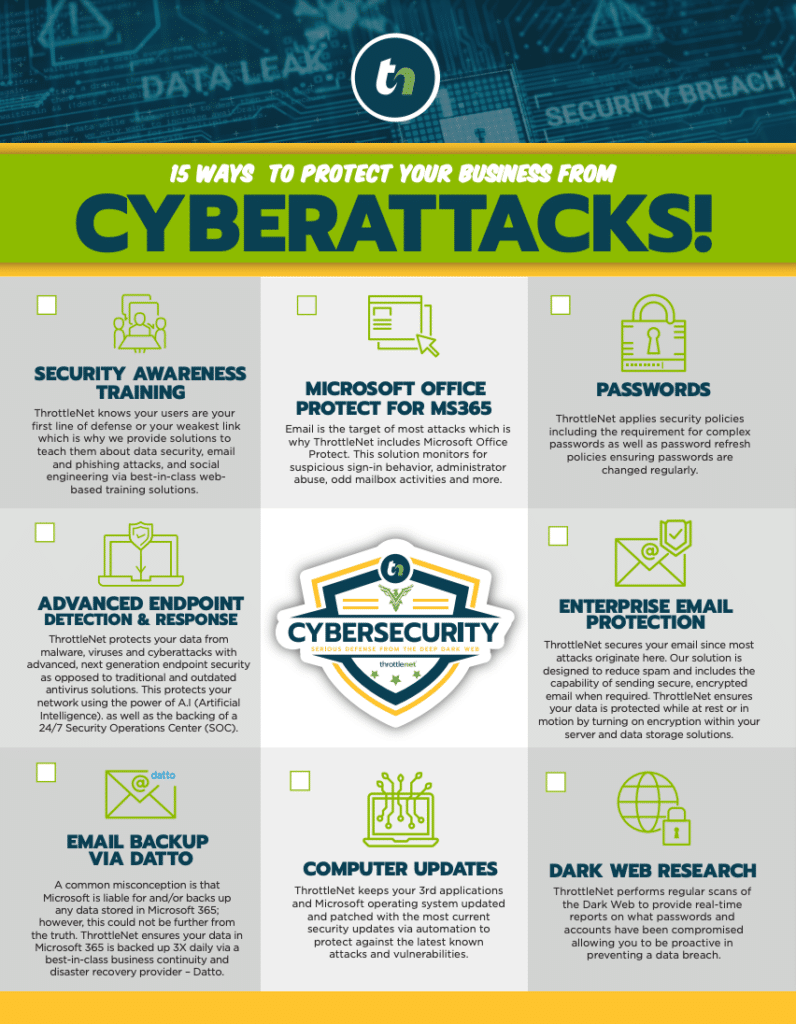
If a nonprofit suffers a breach, it isn’t just a technical headache, it is a breach of donor trust. Communicating this to the board shifts the IT budget from “operational expense” to “donor retention strategy.” When a vCIO can show the board that your network is backed by robust policies, 24/7 Security Operations Center (SOC) monitoring, and a $500,000 cybersecurity protection program, it provides the fiduciary confidence needed to secure major grants.
The vCIO Board Reporting Framework
So, what should actually go in your quarterly board packet? Leave the patch logs behind. A modern, board-ready IT risk report should be visual, plain-spoken, and heavily focused on business impact.
A comprehensive vCIO dashboard (like ThrottleNet’s TN TechHub) transforms complex data into executive insights. Your board report should include:
- Red/Yellow/Green Traffic Light Systems: A visual scorecard of organizational risk. Green means compliant; Yellow means budget required within 12 months; Red means immediate vulnerability.
- Plain-Language Risk Registers: A matrix plotting the likelihood of a cyber event against the severity of its impact on the mission.
- Incident Readiness Scores: A grade reflecting how quickly the organization could recover from a disaster (Disaster Recovery Planning).
- Vendor & SaaS Sprawl Audits: A simple list of third-party software being used, emphasizing which ones hold sensitive constituent data and whether they are vetted for security.
5 Questions Every Nonprofit Board Should Ask About IT
To guide your board toward better IT governance, encourage them to ask these five strategic questions during your next quarterly review:
- If our network is compromised today, how long will it take us to restore critical operations?
- Do we have documented, board-approved policies for modern vulnerabilities like AI adoption and remote work?
- How are we verifying that our third-party vendors and software providers are keeping donor data secure?
- Are our current IT investments aligned with our three-year strategic plan for mission growth?
- Do we have a dedicated cybersecurity protection plan in place to cover financial and legal liabilities in the event of a breach?
Frequently Asked Questions (FAQ)
Are we too small to be a target for cyberattacks?
This is one of the most dangerous myths in the nonprofit sector. Cybercriminals frequently target small to mid-sized nonprofits specifically because they assume these organizations have weaker security budgets and fewer dedicated IT resources. Automated ransomware attacks don’t care about your organization’s size; they only care about exposed vulnerabilities.
What is the difference between an IT Account Manager and a vCIO?
An account manager is typically a sales-oriented role focused on renewing contracts and selling you hardware. A vCIO (Virtual Chief Information Officer) is an executive-level consultant who builds long-term technology roadmaps, manages IT compliance, aids in budget forecasting, and aligns technology directly with your organizational goals.
How do we manage the risk of “SaaS Sprawl”?
As staff members adopt various cloud tools (like Canva, Dropbox, or unapproved email marketing tools), data becomes fragmented. A vCIO helps boards manage this by implementing Vendor Risk Management policies, consolidating software licenses into secure environments like Microsoft 365, and ensuring all platforms meet compliance standards.
Why do we need a $500,000 cybersecurity protection plan if we have cyber insurance?
Standard cyber liability insurance is crucial, but payout relies heavily on proving you took every necessary proactive measure to prevent an attack. A dedicated cybersecurity protection plan (like the one backing ThrottleNet’s services) works alongside your insurance. It ensures that robust, multi-layered security measures, like persistent threat monitoring and next-gen endpoint protection, are actively managed and verified, dramatically reducing the risk of a breach, business interruption, or compromised donor data in the first place.
Preparing for Your Next Board Meeting
Stop letting critical technology initiatives die in committee because of a translation error.
Before your next board meeting, evaluate your current IT reporting. Are you presenting technical metrics, or are you presenting business risks? If your current IT provider is just fixing broken keyboards but failing to provide you with strategic, board-ready insights, you have outgrown your IT support.
Nonprofits that partner with an award-winning Managed Service Provider offering dedicated vCIO services find that boardroom conversations transform from frustrating to empowering. By redefining IT as a strategic driver of mission continuity, you can secure the resources you need to protect your staff, your donors, and your future.