
It is 2:00 AM on the Friday of a long holiday weekend. The office of a mid-sized manufacturing firm in Chesterfield is dark, and the servers are humming quietly. On the IT dashboard, the company’s antivirus software glows a reassuring, peaceful green.
But that green light is lying.
In reality, a cybercriminal is quietly moving through the network using stolen login credentials. Because they aren’t using traditional malware, the antivirus doesn’t see anything wrong. By the time the staff returns on Tuesday morning, the company’s data will be encrypted, operations will be halted, and a massive ransom demand will be waiting on every computer screen.
This scenario—often called the “Friday Night Ransomware” attack—is the stark reality of modern cyber warfare. Cybercriminals deliberately launch attacks on evenings and holidays when small-to-mid-sized business (SMB) offices are empty and IT staff are asleep.
If your business relies solely on basic antivirus software, you are operating under what cybersecurity experts call the “Green Console Fallacy.” A green status doesn’t mean you’re safe; it simply means no known malware has been detected.
Let’s explore why the rules of business security have changed, and why a 24/7 Security Operations Center (SOC) is no longer just an enterprise luxury, but a survival requirement for modern SMBs.

The Green Console Fallacy: Why Basic Antivirus is Obsolete for SMBs
To understand why traditional antivirus (AV) fails against modern attacks, it helps to understand how it was built. Basic AV relies on signature-based detection. Think of it like a nightclub bouncer holding a list of known troublemakers. If a hacker uses a known piece of malware (a recognized face on the list), the AV blocks it.
But what happens if the hacker puts on a disguise? Or worse, what if they steal the VIP pass of one of your actual employees? The bouncer waves them right through.
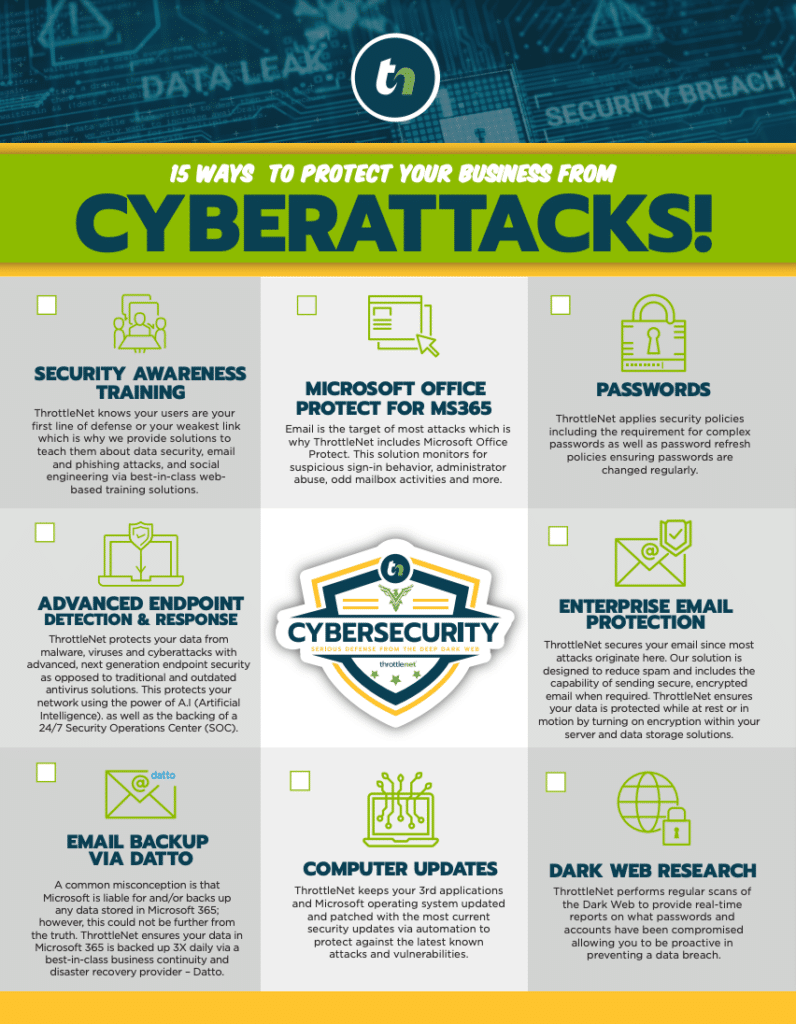
Modern cybercriminals rarely use recognizable malware anymore. Instead, they use behavioral tactics that traditional AV is blind to. This is where behavior-based detection, often called Next-Generation Endpoint Security, steps in. Instead of looking for a known bad file, next-gen security looks for bad behavior. It asks: Why is the receptionist’s computer trying to export our entire customer database to a foreign server at 3:00 AM?
The Invisible Threat: “Living Off the Land”
One of the most dangerous modern tactics is called “living off the land.” In these attacks, hackers don’t install malicious software at all. Instead, they hijack the legitimate, built-in tools that already exist on your Windows or Mac computers (like PowerShell) to do their dirty work.
Because the tool itself is legitimate, basic firewalls and antivirus programs ignore it entirely. Spotting these “fileless attacks” requires continuous, human-led monitoring capable of recognizing when normal tools are being used for abnormal reasons.
Myth: We are too small to be targeted by advanced hackers. Fact: Hackers don’t care about your company size. Automated botnets scan millions of SMB IP addresses daily, looking for unpatched vulnerabilities. You aren’t being targeted because of who you are; you are being targeted because your digital door was left unlocked.
Locks vs. Live Guards: What is a 24/7 SOC?
If antivirus is the lock on your office door, a Security Operations Center (SOC) is the live, highly-trained security guard actively watching the security cameras, patrolling the halls, and ready to tackle an intruder the moment they step foot on the property.
A SOC is a centralized team of cybersecurity experts who monitor, detect, and respond to cyber threats around the clock. For a typical business, a SOC workflow breaks down into four simple steps:
- Collection (Telemetry): The SOC gathers data from every endpoint (laptops, servers, mobile devices) and network logs to create a complete picture of your digital environment.
- Detection: Using advanced AI and threat intelligence, the system flags anomalies—like an employee logging in from St. Louis and Russia within the same hour.
- Triage: This is where humans matter. Security analysts investigate the alert to determine if it’s a false alarm (an employee using a VPN on vacation) or a genuine attack.
- Response: If it’s an attack, the SOC instantly isolates the infected machine from the network, stopping the threat before it can spread laterally to your servers.
When an alert goes off at 2 AM on a Saturday, a software program cannot physically stop a human attacker. You need human experts awake, alert, and empowered to shut down the attack in real-time.
The True Cost: In-House SOC vs. Managed 24/7 Security Monitoring
Once business leaders understand the necessity of 24/7 monitoring, the immediate question becomes: How much does this cost?
Building an internal SOC is staggeringly expensive. To cover 24/7 shifts 365 days a year, you need a minimum of five to six dedicated cybersecurity engineers. Factor in the cost of enterprise-grade security software (like SIEM platforms), ongoing training, and infrastructure, and an in-house SOC easily costs over $1,000,000 annually. For a 50-person or even 200-person company, that is completely unfeasible.
This financial gap is why Managed Detection and Response (MDR) and outsourced SOC services exist.
By partnering with a Managed IT Services Provider (MSP) that has a built-in SOC, Chesterfield businesses can access Fortune-500-level security for a predictable monthly fee. You gain an entire team of specialists—from Tier 1 triage engineers to advanced threat hunters—at a fraction of the cost of hiring a single internal IT employee.
The Chesterfield SMB Playbook: Evaluating 24/7 Security Providers
Not all IT providers are created equal. Many rely on small teams of generalists who act as a “jack-of-all-trades” but lack deep cybersecurity specialization. If you are evaluating your current IT setup or looking for a new partner, here is your evaluation playbook:
1. Demand Multi-Tiered Specialist Teams
Look for a provider that doesn’t just offer an “IT guy,” but a fully staffed, multi-tiered help desk. ThrottleNet, for example, utilizes dedicated specialist teams for cybersecurity, cloud services, and project management. This structure allows for our industry-leading 90-second average response time and 93% same-day resolution rate. Problems are solved faster because issues go directly to the right expert.
2. Require Financial Accountability
A security provider should put their money where their mouth is. Ask if they offer any financial guarantees. ThrottleNet backs its security posture with an exclusive $500,000 Cybersecurity Protection Program, covering ransomware, business email compromise, and downtime expenses. (In fact, ThrottleNet customers have never paid a ransomware attack).
3. Look for Strategic Business Alignment
Security shouldn’t operate in a vacuum; it must align with your business goals. Choose a partner that includes a Dedicated Virtual Chief Information Officer (vCIO). A vCIO doesn’t just fix computers; they act as an extension of your leadership team, building long-term technology roadmaps, managing IT budgeting, and ensuring compliance.
4. Co-Managed Options for Internal Teams
If you already have an internal IT manager, you don’t need to fire them to get a SOC. Through Co-Managed IT Services, a provider like ThrottleNet can act as an extension of your current team, taking on the burden of 24/7 monitoring, enterprise cybersecurity, and help-desk overflow so your internal staff can focus on big-picture projects without burning out.
Frequently Asked Questions (FAQ)
What is the difference between Managed Detection and Response (MDR) and a SOC?
A SOC is the physical or virtual facility and the team of people (the security analysts). MDR is the service that the SOC provides. When you purchase MDR, you are paying for the SOC team to continuously monitor your network and actively respond to threats on your behalf.
Do I really need 24/7 monitoring if all my files are in Microsoft 365 or the cloud?
Absolutely. The cloud is just a computer sitting in someone else’s building. While Microsoft secures their physical servers, you are responsible for securing the data you put on them (this is called the Shared Responsibility Model). Business Email Compromise (BEC), where hackers steal Office 365 credentials to intercept wire transfers or steal data, is one of the most common threats facing SMBs today. 24/7 monitoring detects these unauthorized logins instantly.
How does proactive monitoring help my business with compliance?
Whether you fall under HIPAA (healthcare), FINRA (finance), or are applying for standard Cyber Liability Insurance, auditors and insurers now mandate advanced security measures. Having a 24/7 SOC, persistent threat monitoring, and verified backups are increasingly becoming strict requirements simply to qualify for insurance coverage.
Ready to Build Your Digital Fortress?
Relying on basic antivirus in today’s threat landscape is like leaving your business’s front door wide open overnight. The technology required to protect your data, your employees, and your reputation has evolved, and your IT strategy must evolve with it.
At ThrottleNet, we are passionate about turning IT frustration into joy. For over 25 years, we’ve served as the most reviewed and trusted managed IT support provider in the Midwest, helping St. Louis and Chesterfield businesses reclaim their peace of mind.
Whether you need a complete Managed IT solution or Co-Managed support to empower your internal team, our 24/7 SOC, dedicated vCIOs, and award-winning rapid response teams are ready to protect your future.
Want to know where your network stands? It starts with understanding your baseline. Take the first step toward true business continuity by exploring exactly how secure your current environment really is.